Zero-Turn Mower vs Riding Mower: Which Should You Choose? (November 2026)
Choose a zero-turn mower for faster turns around obstacles, or a lawn tractor for a more versatile yard machine. Your layout, towing needs and comfort on slopes should guide the choice.
On this page (9 sections)
- Zero-Turn Mower vs Riding Mower: Which Should You Choose?
- Zero-turn mower vs riding mower: what is the main difference?
- Which mower suits your yard layout?
- Which mower is better for towing?
- How does slope change the choice?
- What should you compare before choosing a model?
- Which mower makes sense for a large property?
- What accessories help with storage and maintenance?
- Which should you choose: a zero-turn or lawn tractor?
Zero-Turn Mower vs Riding Mower: Which Should You Choose?
Choose a zero-turn mower for a large lawn with many obstacles, or a lawn tractor when towing and general yard work matter more. In the zero turn mower vs riding mower decision, yard shape and planned tasks matter as much as lawn size.
A zero-turn mower is a type of riding mower. In everyday comparisons, “riding mower” often means a lawn tractor with a steering wheel, while a zero-turn uses separate drive controls to turn more tightly.
Both can cut large lawns while you ride. Their layouts, steering and compatibility with yard attachments can make them feel like very different choices.
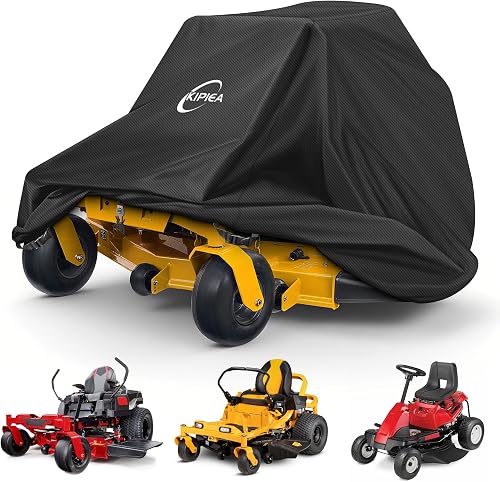 Best for outdoor zero-turn storage
Kipiea Zero Turn Mower Cover- 600D Heavy

Zero-turn mower vs riding mower: what is the main difference?
A zero-turn mower is built to make tight turns, while a lawn tractor is built around familiar steering and broader yard use. Check the control style and attachment options for the exact model you are considering.
For a brand-by-brand look, compare Toro and John Deere zero-turn mowers.
On many zero-turn mowers, the operator controls each rear drive wheel separately. This setup can let the mower turn around a tree or landscape bed without a wide looping path.
A lawn tractor typically uses a steering wheel and front wheels to guide its path. Its turning radius is wider, so it may need more space to turn around obstacles.
The choice isn't simply “fast” versus “slow.” A zero-turn can save time on a clear, intricate lawn, but its advantage shrinks when the yard has narrow gates, steep areas or jobs that call for towing.
Which mower suits your yard layout?
Choose a zero-turn when your lawn has open areas and many obstacles to mow around. Choose a lawn tractor when its steering, size or broader yard tasks fit your property better.
Walk the yard before choosing. Note trees, garden beds, fences, ditches, gates, sheds and the places where you need to turn around.
A zero-turn can trim mowing paths close to obstacles, which may reduce the need to circle back with a smaller mower. However, its deck and body still need clearance through gates and around tight corners.
A lawn tractor may be easier to maneuver in confined sections if its turning radius and deck fit the space. Make a simple map and measure the narrowest passage, then compare those measurements with the mower's width and turning needs.
When does a zero-turn's turning advantage help?
A zero-turn can help when most of the mowing area is open enough to let you use its tight turns. Rows of trees, curved beds and other scattered obstacles can make that turning control useful.
Its advantage is less clear on a small lawn with tight corners and narrow paths. If the mower can't reach a section or turn safely there, a push mower or trimmer may still be needed.
When is a lawn tractor more practical?
A lawn tractor can suit a yard where mowing is one part of regular property care. Its steering wheel feels familiar to many drivers, and some models support compatible attachments for other jobs.
Don't assume every tractor accepts the same equipment. Check the exact model's manual for attachments, towing limits and operating instructions before buying a cart or other accessory.
If you're deciding what riding lawn mower should I buy, start with the jobs you expect it to handle. That list can narrow the choice faster than comparing mower types by name alone.
Which mower is better for towing?
A lawn tractor is often the more natural choice if you regularly tow compatible yard equipment. A zero-turn may support towing too, but that depends on its model and approved attachments.
Think about what you plan to pull: a yard cart, a spreader or another attachment. Confirm that the mower's manufacturer allows that use, then check the hitch, load and slope limits in the manual.
Towing can affect control and stopping, especially on uneven ground or a slope. Follow the mower's instructions for speed, load and operating conditions rather than assuming a larger mower can pull more.
If mowing is your only regular task, towing may not justify choosing a tractor. If you expect to haul tools or yard material often, it may be worth making compatibility a deciding factor.
How does slope change the choice?
Slope guidance for the exact mower matters more than the zero-turn or tractor label. Check each manual before mowing a hill, and choose a model whose instructions fit your property.
A slope can change traction, steering and stability. Wet grass, loose ground and sudden turns can make conditions harder, so don't treat a mower's ability to climb as proof that it is safe to use on every hill.
Some mower manuals restrict mowing direction or use on slopes. Follow those rules, avoid the areas the manufacturer says not to mow, and consider a different method for ground beyond the mower's limits.
Read guidance about choosing a riding mower for hills before narrowing your options. For steep terrain, the guide to what type of mower to choose for steep hills can help you consider alternatives.
What should you compare before choosing a model?
Compare the mower's fit and approved uses before comparing brand names. A model that fits your yard's gates and slopes is more useful than one with a turning feature you can't use.
For a brand-level comparison, see Toro and Cub Cadet zero-turn mowers.
Check these points for each candidate:
- Cutting width and clearance: Measure gates, storage doors and narrow paths.
- Turning space: Consider how much room exists at beds, trees and fence lines.
- Terrain guidance: Read the manual for slope limits and mowing directions.
- Attachments: Confirm the equipment you want is approved for that model.
- Storage: Measure the mower and the space needed to park it.
- Controls: Sit in the seat if possible and see whether the steering or drive controls feel manageable.
A best rated riding lawn mower roundup can help you compare tractor options. If you're comparing a specific brand, see Husqvarna vs Ariens zero-turn mowers for another model-to-model comparison.
A cordless push mower may still be useful for small areas a riding mower can't reach. Learn how a cordless lawn mower works if you want to compare that option for trim zones.
Which mower makes sense for a large property?
Choose based on the property’s obstacles, terrain and extra jobs, not acreage alone. Two yards of the same size can call for different mower layouts.
A broad, open lawn may let a zero-turn cover ground with fewer wide turns. A property with regular hauling, tighter access or varied terrain may favor a lawn tractor, depending on the model's approved uses.
Storage and upkeep also grow with a larger machine. Make sure you can park it, clean the deck and reach routine maintenance points safely.
For a five-acre property, compare riding mowers for five acres with your own terrain and mowing pattern. A best Husqvarna riding mower guide can also help if that brand is on your shortlist.
What accessories help with storage and maintenance?
A fitted cover can help protect a parked zero-turn from outdoor exposure, while a compatible lift can provide access for routine deck care. Measure equipment and verify compatibility before choosing either accessory.
Follow each accessory's instructions and the mower manual during storage or maintenance. For a lift, confirm its capacity and fit for the mower before raising the equipment.
Our score weighs specs, features and buyer feedback against what you're shopping for.
Which should you choose: a zero-turn or lawn tractor?
Choose a zero-turn for a mostly open, obstacle-filled lawn where tight turns can save mowing time. Choose a lawn tractor if familiar steering, towing or broader property tasks matter more.
Before you decide, confirm the mower fits your paths and storage space. Then check its manual for slope guidance and compatible attachments, so the machine suits the work you actually do.
Frequently asked questions
What is a zero-turn riding mower?
A zero-turn riding mower is a ride-on mower designed to turn with a very small radius, commonly using separate controls for its rear drive wheels. That lets the operator pivot around trees and beds more closely than with a typical lawn tractor, though the exact controls and turning behavior vary by model.
Is a zero-turn mower better than a riding mower?
A zero-turn mower is often the better fit for a broad, obstacle-filled lawn where repeated turns take time. A lawn tractor is often more useful if you want a mower that can also tow compatible yard equipment.
Compare the specific model's slope guidance, attachments and storage needs before deciding.
Can a zero-turn mower tow a cart?
Some zero-turn models can tow compatible carts or attachments, but towing ability is model-specific. Check the manual for approved attachments, hitch limits and operating instructions before connecting anything.
If towing is a regular job, a lawn tractor may offer a more suitable setup.
Which mower is easier to use on hills?
Neither mower type is automatically best on every hill. Slope limits, traction, operator skill and the direction of travel all matter, so follow the exact model's manual and avoid slopes it does not allow.
Compare guidance for riding mowers on hills and mowers for steep hills.
What should I choose for a large property?
For a large, mostly open lawn, a zero-turn mower can reduce time spent turning around obstacles. A lawn tractor may make more sense if the property also needs regular towing.
For a five-acre yard, compare cutting width, terrain, storage and the work you expect beyond mowing.


