9 Best Riding Lawn Mowers (November 2026)
The best best rated riding lawn mowers include the EGO Power+ Electric Riding Lawn Mower for up to 2 acres, the EGO Power+ Electric Riding Lawn Mower for larger properties, and the MoJack EZ MAX 45001 Riding Lawn Mower for mower maintenance.
On this page (6 sections)
The best rated riding lawn mower in this roundup is the EGO Power+ 42-inch Z6 for properties up to 2 acres per charge. The 52-inch EGO Z6 is the larger-capacity choice, while a walk-behind mower can make more sense when a seated machine would be oversized.
A riding mower is a major fit decision: compare the lawn’s area, gate widths, slope, trees, and storage space before picking a deck. Our roundup includes seated mowers and a few clearly labeled alternatives for buyers who may not need a riding model.
Our picks at a glance
-
1
-
2

-
3

- 4
 Check it
Greenworks 60V 21in Self-Propelled Lawn Mower
Best for walk-behind alternatives - 5
 Check it
Greenworks 80V 21in Self-Propelled Lawn Mower
Best for compact storage - 6
 Best for variable walking paceCheck it
- 7
 Check it
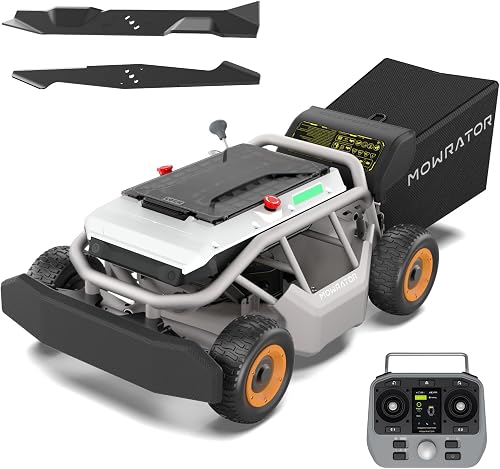
Mowrator S1 4WD 12Ah Remote Control Lawn
Best for steep or tricky ground - 8
 Check it
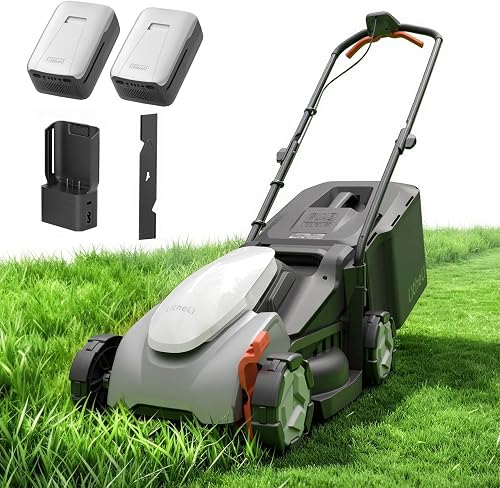
Litheli Cordless Lawn Mower 14 Inch
Best for very small lawns - 9
 Check it
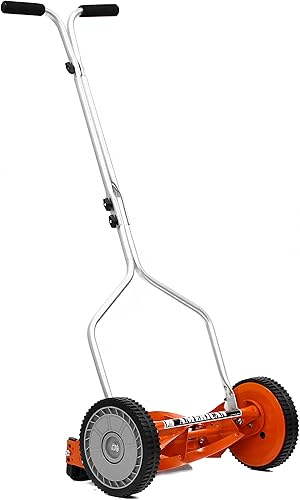
American Lawn Mower 1204-14 14-Inch 4-Blade Push
Best for simple manual mowing
Which riding mower fits your yard and mowing style?
The 42-inch EGO Z6 is the strongest match here for a typical 1–2 acre property, while the 52-inch model is aimed at larger open lawns. Choose by the area you need to cover and whether a zero-turn layout works around your obstacles.
The 42-inch deck and stated 2-acre capacity make the first EGO a more moderate seated option. For more room, the 52-inch model is rated for up to 4 acres per charge, but its wider deck needs more clearance at gates and storage areas.
If you want a brand-specific comparison, see our guide to the best Husqvarna riding mower. For a broader decision process, read what riding lawn mower should I buy.
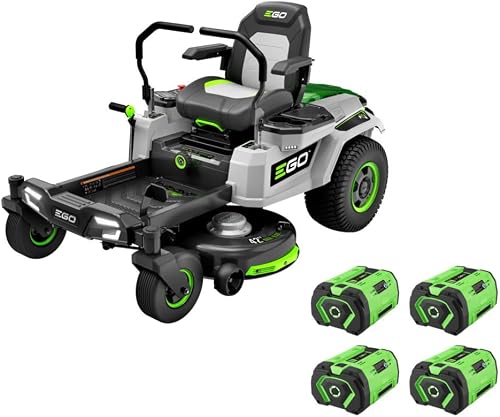
EGO Power+ Electric Riding Lawn Mower: Best for up to 2 acres
- 42-inch deck
- Up to 2 acres per charge
- Four 56V 10.0Ah batteries
- Zero-turn radius
The 42-inch Z6 combines a zero-turn layout with four included batteries and a stated capacity of up to 2 acres per charge. Its deck height adjusts across 10 positions.
Pros
- Zero-turn radius
- Up to 2 acres per charge
- 10 cutting height positions
Cons
- Large 42-inch deck may be hard to maneuver in tight yards
- More battery capacity may be needed beyond the stated area
The EGO Power+ 42-inch Z6 is the best fit for buyers who want a seated electric mower with a zero-turn radius and a stated capacity of up to 2 acres per charge. Four 56V 10.0Ah batteries are included, and EGO says the mower can reach speeds up to 8 MPH.
Its deck adjusts from 1.5 to 4.5 inches across 10 positions. The 3-in-1 setup supports mulching, bagging, and side discharge, so you can choose how to handle clippings.
The zero-turn layout can help when you need to steer around trees or lawn beds, but it still needs clear turning space. Check the narrowest gate and storage opening against the mower’s 44.4-inch width before settling on it.
Choose this model for a property near its stated 2-acre capacity. If your lawn is much smaller, compare our guide to the best riding lawn mower for 1 acre and the options for a best riding lawn mower for 2 acres.
EGO Power+ Electric Riding Lawn Mower: Best for larger properties
- 52-inch deck
- Up to 4 acres per charge
- Six 56V 12.0Ah batteries
- Zero-turn radius
The 52-inch Z6 has a wider deck and six included batteries, with a stated mowing capacity of up to 4 acres per charge. Its 10-position height adjustment covers 1.5 to 4.5 inches.
Pros
- Up to 4 acres per charge
- 52-inch deck
- Six included batteries
Cons
- Wide deck needs room to turn and store
- Large properties may require planning around charging
The 52-inch EGO Z6 is the larger seated option, with six 56V 12.0Ah batteries and a stated capacity of up to 4 acres per charge. Its wider deck may reduce passes on open ground, while its 10-position height range runs from 1.5 to 4.5 inches.
EGO lists a speed range of 4–8 MPH and a 3-in-1 deck for mulching, bagging, or side discharge. The mower also has a zero-turn radius, so the same maneuverability questions apply: account for trees, beds, slopes, and safe turning room.
For a sloped property, compare riding mowers for hills.
A 52-inch deck is a substantial fit for a compact or fenced yard. Measure gates, trailer space, and shed access, then compare the wider model with riding mowers for five acres if your property is larger.
What should you compare before buying a riding mower?
Compare yard capacity, deck width, steering style, charging needs, and storage access before buying. A large capacity number does not settle whether the machine can pass through your gates or turn safely around landscaping.
Use your actual mowable area rather than the full property size. Paths, buildings, garden beds, and wooded sections may leave much less lawn than the lot acreage suggests.
A wider deck can cover more ground per pass, but it also needs more clearance. Measure every tight entrance and the space where the mower will park.
For acreage-specific advice, compare lawn mowers for three acres, mowers for a one-acre lot, and the right mower size for two acres.
Is a zero-turn mower or lawn tractor better?
A zero-turn mower suits yards with many turns and obstacles, while a lawn tractor may feel more familiar if you prefer steering-wheel control. Your layout and comfort with the controls should guide the choice.
Zero-turn mowers pivot tightly, which can reduce the space needed to circle trees or beds. The tradeoff is that steering can feel different from driving a car, so make sure the control style suits you.
A lawn tractor often has a familiar steering wheel and may suit a more open yard with long mowing runs. Compare zero turn mower vs riding mower before choosing based on deck width alone.
When is a walk-behind mower a better choice?
A walk-behind mower can be easier to store and guide through small gates than a riding mower. It may suit a compact lawn where a seated machine would take up more space than it saves in mowing time.
The Greenworks and Worx options here are self-propelled walk-behind mowers. The Litheli and American Lawn Mower models have narrower 14-inch cutting widths, which can help in tight spaces but mean more passes over a larger lawn.
If your property is small, compare the best riding lawn mower for small yards with walk-behind options before committing to a rider. For basic battery mower context, see how a cordless lawn mower works and what brushless means on a lawn mower.
What should you budget space and time for?
Plan for the mower’s full width, turning room, charging access, and seasonal care before you buy. A riding mower needs more than a parking spot, especially when the deck must pass through a gate or into a shed.
Battery-powered riders avoid gas refills, but you still need a suitable place to charge and store the batteries. The EGO models include chargers, and their stated area capacities give you a starting point for estimating whether a charge fits your mowing routine.
Keep the deck clear of packed grass and follow the mower’s manual for blade service and battery storage. A lift such as the MoJack EZ MAX is an accessory for compatible riding mowers, not a mower itself.
Which riding lawn mower should you choose?
Choose the 42-inch EGO Z6 if your property is near 2 acres and its zero-turn layout fits your gates and storage. Choose the 52-inch EGO Z6 for a larger open lawn, and consider a walk-behind option when compact storage matters more than a seated ride.
For very large properties or different ground conditions, compare your acreage needs with the best lawn mower for a one-acre lot or a chainsaw buying guide if land clearing is also part of your yard work.
Our score weighs specs, features, and buyer feedback against what you're shopping for.
Our top 3 picks at a glance
-
1
-
2
-
3
Frequently asked questions
What is the best rated riding lawn mower for 2 acres?
The EGO Power+ 42-inch Z6 is rated for up to 2 acres per charge and includes four 56V 10.0Ah batteries. The actual area you can mow can vary with grass and terrain, so compare your property’s slopes, obstacles, and charging needs before choosing a riding mower.
Is a zero-turn mower better than a lawn tractor?
A zero-turn mower can make tighter turns around trees and beds, while a lawn tractor uses a familiar steering wheel and may suit buyers who prefer that layout. Compare turning space, slope conditions, deck width, and storage access before deciding which style fits your yard.
What deck size should I choose for a riding mower?
Choose a deck that fits both the open lawn and its tightest passages. A wider deck can cover more ground per pass, but it also needs more room to turn and store.
Measure gates, shed doors, and narrow paths before choosing a 42-inch or 52-inch deck.
Can a cordless mower replace a riding lawn mower?
A cordless walk-behind mower can be a practical alternative on smaller lawns, where the seated position and wider deck of a rider are unnecessary. Compare the mower’s stated coverage per charge with your lawn area, then account for slopes, obstacles, and the time you want to spend walking.
How do I choose a riding mower for a small yard?
For a small yard, focus on turning room, gates, storage, and whether a rider saves enough effort to justify its size. A compact walk-behind mower may be easier to store and guide around close-set beds.
See our guide to the best riding lawn mower for small yards for a closer comparison.


