What Size Mower Do You Need for Two Acres?
For 2 acres, choose a mower based on clear cutting width, obstacles and the time you can spend mowing. A wider deck covers more ground per pass, while a walk-behind gives you more control around trees, beds and narrow gates.
On this page (9 sections)
- What size mower for 2 acres should you choose?
- How much of the 2 acres is actually grass?
- How do terrain and obstacles affect mower size?
- How much time do you want to spend mowing?
- How do these mower examples fit a 2-acre decision?
- Should you choose a riding mower for two acres?
- What should you measure before buying?
- How do you choose between width and maneuverability?
- What size mower is best for two acres?
For 2 acres, choose a mower by the lawn's open area, obstacles and the time you have to mow. A wider cutting deck can reduce the number of passes across open ground, while a walk-behind offers closer control around trees, beds and narrow gates.
Two properties with the same acreage can need different mowers. One may have broad, open lawn; another may have a house, driveway, garden beds and wooded sections that leave much less grass to cut.
Start by estimating the mowable area, then check the narrowest gate, slope and storage spot. If a riding mower looks like a fit, compare best rated riding lawn mower options before deciding on a size.
What size mower for 2 acres should you choose?
Choose a mower wide enough to make open sections manageable, but small enough to pass through your access points and turn around obstacles. The right size is the widest practical cutting width for your actual lawn, not necessarily the widest mower available.
| Your yard layout | A sensible starting point | Main trade-off |
|---|---|---|
| Mostly open, broad lawn | Consider a riding mower with a wider deck | Needs room for gates, turns and storage |
| Mixed lawn with trees and beds | Compare a wider walk-behind or compact riding mower | More turns can erase some time saved by a wider deck |
| Divided or narrow lawn sections | Consider a compact walk-behind | More walking and overlapping passes |
| Small lawn sections with tight corners | A narrow mower or trimmer-mower setup may help | More passes across the area |
These are layout-based starting points, not strict acreage limits. Measure your gates and turning areas before narrowing your options.
If you are weighing a riding mower against a walk-behind, our guide to what riding lawn mower should I buy explains how to compare the yard, storage and operator needs.
How wide should a mower be for 2 acres?
Choose a cutting width that covers ground efficiently while still fitting through the tightest route you expect to use. The wider the cut, the fewer passes across a straight section, but width alone does not account for turns, overlap or trimming.
A 14 in mower needs many more passes over a broad stretch than a mower with a much wider deck. Yet a large deck may leave small sections unreachable, or require extra maneuvering around obstacles.
Measure the narrowest gate, passage between a shed and fence, and any route around the house. Compare those measurements with the mower's overall width, which can be greater than its cutting width.
How much of the 2 acres is actually grass?
Base mower size on the area you mow, not the total property size. Buildings, driveways, ponds, woods and planted beds all reduce the lawn area.
Walk or map the sections you maintain. If you can, estimate each lawn section separately instead of treating the whole lot as one rectangle.
Include awkward edges and narrow strips in your plan. A mower may cover a large central lawn quickly but still leave a lot of trimming around fences and landscaping.
Choose a machine for the grass you cut regularly. If only one acre of a 2-acre property is lawn, a mower sized for two full acres may add cost, storage needs and turning difficulty without helping your routine.
How do terrain and obstacles affect mower size?
Obstacles and slopes can make a smaller, more maneuverable mower a better fit than a wider machine. A broad deck is most useful when it can move through the yard without repeated tight turns or blocked routes.
Count trees, garden beds, play equipment, narrow corners and steep sections. Note any places where you have to back up or make several passes to turn.
Check the mower's guidance for slope use before choosing, and consider where the clippings will go. Mulching and bagging setups may affect how you handle edges and tight sections.
If a yard has several separate lawn areas, consider whether the mower can pass between them without loading it onto a trailer or taking a longer route. That connection can matter more to your mowing routine than another few inches of cutting width.
How much time do you want to spend mowing?
A wider mower can reduce pass count, but it does not guarantee a specific mowing time. Actual time depends on obstacles, turns, overlap, terrain and the amount of grass.
Use a rough comparison to see how width affects straight passes. For example, one acre is 43,560 square feet, so two acres is 87,120 square feet; dividing that area by cutting width gives a theoretical distance before turns and overlap.
| Cutting width | Approximate straight-line distance over 2 acres |
|---|---|
| 14 in | About 62 miles |
| 16 in | About 55 miles |
| 30 in | About 33 miles |
| 42 in | About 21 miles |
This is a geometry estimate, not a time promise. It assumes every inch of the full 2 acres is cut in perfectly straight, adjacent passes, which real yards do not allow.
To estimate your own time, mow a representative section at your normal pace and note how long it takes. Include turning, emptying a bag, recharging a battery and trimming edges when you project the whole job.
How do these mower examples fit a 2-acre decision?
These examples show why a narrow mower can suit a small or awkward section, but may be a poor match for mowing two full acres as one job. Check both the coverage guidance and the cutting width before treating a model as an acreage solution.
American Lawn Mower 1204-14: narrow, manual cutting
The American Lawn Mower 1204-14 has a 14 in cutting width and manual reel operation. Its 8.5 in polymer wheels and 19 lb weight are details to consider if easy maneuvering matters for small lawn sections.
The adjustable blade height is 0.5 to 1.75 in, and the mower can cut grass up to 4 in tall. Its guidance says to mow no more than one-third of the grass blade and avoid using it when the grass is wet.
For two acres of open lawn, this width means a very long push-mowing route. Consider it only if you are choosing it for a smaller section, prefer manual operation, and are comfortable with the extra passes.
Greenworks 40V 16in Push Lawn Mower: check the coverage limit
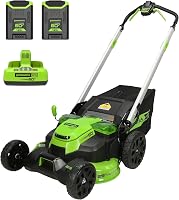
The Greenworks 40V mower has a 16 in cutting width and comes with a 4.0 Ah battery and charger. Greenworks says it can cut up to one-third acre on a fully charged battery, with results varying by grass condition and operator technique.
At that stated coverage, mowing 2 acres would take at least six full-charge coverage intervals in ideal planning terms. Real coverage can vary, so this is not a guarantee of how many charges your lawn will require.
Use the maker's coverage figure to plan battery capacity and charging breaks. If you want to learn how two packs work in a compatible mower, see what a dual-battery mower does with its two packs.
BLACK+DECKER Weed Eater: compact cutting for difficult spaces
The BLACK+DECKER Weed Eater is a 12 in, 3-in-1 trimmer, edger and mower with a removable wheeled deck. The brand describes it for smaller yards, slopes and spaces that are hard to reach with a standard walk-behind mower.
The included kit has two 20V MAX batteries. The product information does not give a mowing coverage figure, so consider the yard layout and expected runtime before making it your main mower.
It is better suited to tight sections and trim work than to covering two acres as the sole mower. For a wider view of cordless mower operation, read how a cordless lawn mower works.
Should you choose a riding mower for two acres?
A riding mower is worth comparing when most of the two acres is open lawn and reducing walking time matters to you. Its wider cutting path can reduce the number of passes, but a large mower can be hard to store, transport or turn in a crowded yard.
Measure gates, paths and the space where you will park it. Check the turning area around trees and beds, and consider whether the lawn has slopes that affect your choice.
Our best riding lawn mower for 2 acres guide focuses on riding options for this property size. If your lawn is closer to three mowable acres, compare the best lawn mower for 3 acres as well.
What should you measure before buying?
Measure the route, storage area and lawn pinch points before choosing a mower. A cutting width that fits the open lawn may still be too wide for the gate or shed door.
- Measure the narrowest gate and passage between lawn sections.
- Compare those widths with the mower's overall width, not just its cutting width.
- Mark trees, beds, fences and other obstacles where the mower must turn.
- Check storage height and floor space, including room to get the mower in and out.
- Note slopes, rough ground and any wet areas you typically avoid.
- For a battery mower, compare maker-stated coverage with the amount of lawn you need to cut.
A quick yard sketch helps you see whether a wider deck saves passes or adds difficult turns. Include the actual route between sections so you can account for gates and narrow paths.
How do you choose between width and maneuverability?
Choose width for open, straight sections and maneuverability for tight, divided spaces. If your yard has both, compare a wider walk-behind with a compact riding mower and consider how much each area contributes to the total mowing time.
Walk the route with the mower's dimensions in mind. Leave enough clearance to turn without damaging plants, scraping fences or needing several reversals.
A narrow mower is not automatically easier overall if it requires far more passes. A wide mower is not automatically faster if you spend much of the job navigating obstacles.
What size mower is best for two acres?
The best size mower for two acres is the widest option that fits your gates, turns and storage, and matches how much lawn you actually cut. Choose a riding mower for broad open areas when its size and terrain fit; choose a walk-behind for tighter layouts or when you prefer to mow in smaller sections.
For battery models, compare coverage guidance with your mowing plan and charging options. For manual or compact mowers, be realistic about the number of passes across large sections.
Measure the tightest route first, then compare your open-lawn area and available mowing time. That gives you a practical answer to what size mower for 2 acres without relying on acreage alone.
Frequently asked questions
What size mower is best for 2 acres?
The best size mower for 2 acres depends on how much of the land is mowable lawn, how many obstacles it has, and how quickly you need to finish. A wider mower can reduce passes across open ground, while a walk-behind or compact mower may suit divided areas with tight turns and gates.
Can a walk-behind mower cut 2 acres?
A walk-behind can cut 2 acres if you have enough time, the terrain is manageable and the mower's power source can cover the work. Check the maker's coverage guidance for battery models, then consider how much turning, overlap and trimming your lawn will require.
Is a riding mower worth it for 2 acres?
A riding mower may be worth considering when most of the 2 acres is open lawn and you want to reduce walking time. Compare the mower's cutting width with gates, trees, slopes, storage space and the amount of grass you actually mow.
How long does it take to mow 2 acres?
Mowing time depends on cutting width, speed, turns, overlap, terrain and trimming. Open, rectangular ground takes fewer turns than a yard split by trees, beds and paths.
Time one representative section and use that pace to estimate the full lawn.
What cutting width should I choose for 2 acres?
Choose the widest cutting width that fits your access routes and can turn around the obstacles in your yard. A wider deck can cover more ground in each pass, but it may be awkward through narrow gates or around small beds.
Measure those pinch points before comparing mower widths.