How to Choose a Riding Lawn Mower for Hills
The best riding lawn mower for hills is one whose drive, tires and layout suit your actual slopes and turning space. Check the mower manual for its slope limit, and choose a design you can control on the steepest ground you plan to mow.
On this page (7 sections)
- What should you check before choosing a riding mower for hills?
- Which riding mower design fits your hills?
- Which traction and tire details matter on a slope?
- What safety features and controls should you compare?
- When should you choose a walk-behind or smaller mower?
- How can you compare riding mowers for your property?
- What is the best riding lawn mower for hills on your lawn?
The best riding lawn mower for hills is one matched to your steepest slope, traction needs and room to turn. Check the manual's slope limits first, then compare mower design, drive layout, tires and how you can keep control across the whole lawn.
A riding mower can save effort on a large, rolling yard, but extra power does not make every hill suitable. If the steepest sections exceed a model's guidance, choose another mowing method for those areas.
For a wider look at mower types, start with our guide to the best lawn mower for hills.
What should you check before choosing a riding mower for hills?
Choose a riding mower only if its manual allows the slopes on your property. Slope limits and operating instructions vary by model, so a general rule of thumb cannot replace the manufacturer's guidance.
Walk the lawn and identify its steepest sections, cross-slopes, dips, soft ground and tight turns. Note where you need to stop, reverse or maneuver around trees, garden beds and other obstacles.
Consider how wet or uneven the grass gets, too. A hill that seems manageable in dry conditions can become harder to control when the ground is slick or the tires lose grip.
How do you assess slopes for the best riding lawn mower for hills?
Compare the mower's slope guidance with the steepest ground you intend to mow, including transitions between flat and sloped areas. If you cannot tell whether a slope is within the allowed range, ask the manufacturer or dealer before using the mower there.
A phone measurement or visual estimate can help you compare sections, but do not treat either as permission to exceed the manual. Uneven ground can make the route and turns matter as much as the grade.
Which riding mower design fits your hills?
A lawn tractor and a zero-turn mower have different steering and drive layouts, so each can suit different yards. Choose by checking slope guidance, traction and control together, rather than picking by turning speed or mowing width alone.
A lawn tractor uses a steering wheel and front wheels to guide the machine. A zero-turn model uses separate controls to steer its drive wheels, which can make tight turns easier in open areas but calls for practice and careful checking on slopes.
Compare these designs in context with our guide to riding mower types for steep hills.
| Design | What to consider on hills | Check before choosing |
|---|---|---|
| Lawn tractor | Steering-wheel control and turning space | Manual slope limit, drive layout and tire guidance |
| Zero-turn mower | Tight turns and separate steering controls | Slope guidance, traction and control on your grade |
| Walk-behind mower | Useful where a riding mower is unsuitable | Slope directions, traction and operator effort |
The table is a starting point, not a promise of performance. Different models in the same category can have different limits and operating instructions.
Should you choose a zero-turn mower for hills?
A zero-turn mower can suit open, rolling lawns with enough space to practice its controls, if the manual allows your slopes. Its tight turning radius can help around obstacles, but it does not guarantee traction or safe operation on a grade.
Compare its slope guidance and drive layout with a lawn tractor before deciding. Our guide on choosing a zero-turn mower for hills explains the trade-offs to check.
If you're comparing specific brands, see our Husqvarna vs Ariens zero-turn mower guide and Toro vs Cub Cadet zero-turn mower guide.
Which traction and tire details matter on a slope?
Choose tires and a drive layout that the manufacturer recommends for your terrain. Traction depends on the mower, ground and conditions, so tire appearance alone cannot tell you how it will behave on your hill.
Check whether the mower manual discusses tire type, pressure, traction aids or limits on slopes. Follow its instructions; adding weights or changing tires without approval can affect balance and control.
Avoid assuming that a heavier mower is automatically safer. Weight distribution and the machine's design affect how it handles a grade, and the manual provides the model-specific guidance.
How do grass and ground conditions change mower control?
Wet grass, loose soil, ruts and uneven ground can make a slope harder to manage. Mow only in the conditions permitted by the manual, and wait if the lawn is slick or the mower struggles to maintain traction.
Keep the cutting route clear of holes, branches and other obstacles before starting. Sudden turns or stops on a slope can be difficult to manage, so plan a route that follows the model's instructions.
What safety features and controls should you compare?
Look for controls you can understand and operate smoothly, plus the safety features required by the mower's manual. A feature cannot replace safe slope limits or correct operation.
Read the operating instructions before mowing hills, including guidance on starting, stopping, reversing, turning and keeping people clear. Use the recommended protective gear, and never carry passengers unless the mower is designed for them.
Do not mow across a slope unless the manual allows that direction. Keep your hands and feet away from moving parts, and stop the mower if you lose control or notice a traction problem.
For a steeper grade that a riding mower cannot safely handle, compare other options in our guide to the best steep-slope mower.
When should you choose a walk-behind or smaller mower?
Choose a walk-behind mower or another suitable method when the riding mower's manual excludes the grade or the terrain leaves too little room to control it. A smaller mower is not automatically safe on a steep slope, so check its own instructions.
A self-propelled walk-behind can reduce pushing effort on a slope, but compare its drive and slope guidance with the exact route you need to mow. This Greenworks mower has rear-wheel drive, a self-propelled pace control and a 21 in cutting width.
To understand the power system before choosing a cordless walk-behind, read how a cordless lawn mower works. Cutting less grass at a time can also affect battery use; see how mowing height affects battery use.
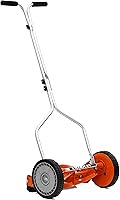
For small areas that need a compact manual mower, this 14 in reel model cuts grass up to 4 in tall and works best when you mow frequently.
A compact 3-in-1 tool can help with small patches and hard-to-reach edges. The BLACK+DECKER model converts between a mower, trimmer and edger, and its product information describes it for smaller yards, slopes and tight spaces.
How can you compare riding mowers for your property?
Use the same checklist for each model so the comparison reflects your lawn instead of a feature list. Start with safety limits, then compare control, traction, fit and upkeep.
| Check | Why it matters |
|---|---|
| Manual slope limit and direction | Confirms whether the mower is suitable for each section |
| Drive and steering layout | Affects how you control the mower and turn |
| Tire guidance | Shows what the manufacturer recommends for grip |
| Deck width and turning space | Affects access around obstacles and narrow areas |
| Seat, controls and visibility | Helps you assess comfort and command of the mower |
| Storage and maintenance needs | Determines whether the mower fits your routine |
Ask a dealer to explain any unclear slope directions before you buy. If your yard has a steep or irregular section, describe its shape and surface rather than asking only whether a model is “good on hills.”
What is the best riding lawn mower for hills on your lawn?
The best riding lawn mower for hills is the model whose manual permits your steepest ground and whose controls fit your terrain. Choose a lawn tractor if its steering and turning space suit the yard, or consider a zero-turn when you need tight turns and its slope guidance allows your grade.
Use a walk-behind or other suitable method for sections outside the riding mower's limits. Compare the best lawn mower for hills options against your property before settling on a machine.
Frequently asked questions
What is the best riding lawn mower for hills?
The best riding mower for hills is the one approved for your slope and equipped to maintain control on your terrain. Check the manual's slope limit, drive layout and tire guidance, then consider turning room and how you will mow across or up and down each section.
Are zero-turn mowers good on hills?
A zero-turn mower can suit open, rolling ground when its manual allows the slope and its steering feels manageable there. Tight turning does not guarantee hill traction or safe stopping, so compare its slope guidance and drive layout with a lawn tractor before choosing.
Should you mow up and down or across a hill?
Follow the mower manual's direction for the specific model and slope. Riding mowers can handle hills differently, and turning across a steep grade can affect stability; avoid guessing from another mower's guidance.
Can a riding mower handle a steep slope?
Some riding mowers have limits that rule out steep slopes. Check the manual before mowing, and leave slopes outside its guidance to a suitable alternative or a professional rather than testing the mower's traction.
Does rear-wheel drive help a mower on hills?
Rear-wheel drive can help a walk-behind mower gain traction on slopes, but it does not mean the mower is safe for every grade. Check the manual's slope guidance and account for wet grass, turns and obstacles.