What Type of Lawn Mower Should You Choose for Steep Hills?
The best lawn mower for steep hills is one its maker approves for your slope, with traction and controls you can manage safely. For many steep residential areas, a walk-behind mower is easier to control than a riding mower, but the right choice depends on the terrain and the machine's limits.
On this page (10 sections)
- What type of lawn mower works best on steep hills?
- How do you check a mower's slope limit?
- What features help a mower stay controlled?
- Should you choose a walk-behind or riding mower?
- Which mowing direction is safer on a hill?
- Which steep hill mower fits a small lawn?
- Is a self-propelled mower a better choice for a steep lawn?
- Can a compact 3-in-1 mower handle awkward slopes?
- What should you do if your slope is too steep to mow?
- How should you choose a lawn mower for steep hills?
The best lawn mower for steep hills is one approved for your slope that you can control without slipping or losing traction. For many steep residential lawns, a walk-behind mower is easier to manage than a riding mower, but the slope, surface and manufacturer's instructions decide what is suitable.
Check the manual's slope limit and mowing direction before choosing equipment. A mower's power or self-propelled drive does not make an unsafe slope safe.
What type of lawn mower works best on steep hills?
A walk-behind mower is often the more manageable starting point for steep residential terrain because you walk beside it and guide its path. Choose a self-propelled model when its drive helps you keep a steady pace, but verify the slope limit and operating directions first.
A push mower gives you direct control, though pushing it uphill can take effort and controlling it downhill can be difficult. Self-propelled drive can reduce pushing, but you still need firm footing and enough space to turn safely.
Riding mowers can cover broad areas efficiently, but a steep hill raises the stakes if traction fails or the machine tips. If you are considering a zero-turn, compare Toro and John Deere zero-turn mowers.
Consider one only when the model is designed for your terrain and its manual explicitly permits the slope and direction you plan to mow.
If you're weighing a riding machine, our guide to choosing the best riding lawn mower for hills explains the key fit questions. For a wider look across mower styles, see the best lawn mowers for hills.
How do you check a mower's slope limit?
Use the mower's manual to find its maximum slope and permitted mowing direction. Don't estimate safety from the engine, tire size or a general description of the mower type.
Slope guidance can vary by model, and some machines have different limits for straight travel and turning. Follow the manual's stricter instructions when the ground is wet, loose, bumpy or covered in long grass.
If the manufacturer gives a limit as a percentage, don't confuse it with degrees. A 100% slope is a 45-degree angle, so a slope percentage is not the same number as an angle in degrees.
A phone inclinometer or a level can help you understand the ground, but it can't tell you whether the mower is safe there. Treat measurements as a screening step, then compare them with the manual.
Leave a slope unmowed with powered equipment if it's beyond the stated limit or you can't keep stable footing. Consider a string trimmer for small patches, or hire a qualified lawn-care professional for terrain that feels unsafe to manage.
What features help a mower stay controlled?
Traction, braking and a controllable pace matter more on a hill than a long feature list. Look for clear slope instructions, a drive system suited to your terrain and controls you can operate without changing your grip or stance.
Rear-wheel drive can help a walk-behind mower move forward, but it doesn't prevent every loss of traction. Keep the mower and your shoes in good condition, and stop if the surface is wet, slick or loose.
A lower center of gravity may help with stability, but don't assume a low profile makes a mower safe on every slope. Use the maker's guidance for the exact model.
For cordless models, battery and motor features affect mowing, but they don't replace slope approval. Learn how a cordless lawn mower works and what brushless means on a lawn mower when comparing battery-powered options.
Should you choose a walk-behind or riding mower?
Choose a walk-behind mower when the area is narrow, uneven or too steep for a riding model approved for that slope. Choose a riding mower only if its manual allows the terrain and you can follow the required travel direction, turning rules and operating precautions.
| Mower type | Where it may fit | Main hill concern |
|---|---|---|
| Push reel | Small, smooth areas that need light cutting | No powered drive; you supply the effort and control |
| Push walk-behind | Small to medium lawns within its slope limits | Uphill effort and downhill control |
| Self-propelled walk-behind | Larger areas where drive support helps manage pace | Traction can still fail; follow the model's slope rules |
| Riding mower | Larger areas only when the specific model permits the slope | Rollover, sliding and turning risks |
| Zero-turn mower | Terrain within the model's stated limits | Quick steering does not remove hill risks |
A riding mower's seat may feel more comfortable, but comfort doesn't guarantee slope suitability. Read how to choose a riding lawn mower before deciding on a riding model.
For zero-turn machines, compare the exact manual's guidance before buying. Our guide to choosing a zero-turn mower for hills and Toro vs Cub Cadet zero-turn mowers can help you weigh model-specific considerations.
Which mowing direction is safer on a hill?
Follow the mower manual's direction for the specific machine and slope. A general rule for one mower type may conflict with another model's instructions, so don't rely on a rule of thumb.
Before starting, clear sticks, stones and other objects that could shift underfoot or be thrown. Walk the route without the mower to check for holes, roots, sharp turns and places where you might lose your footing.
Keep your pace steady and avoid abrupt turns. Don't mow across a slope or turn on a hill unless the manual permits it, and stop if the mower slides or your footing feels uncertain.
Never pull a powered mower backward toward your feet. If you need to change direction, stop and reposition according to the manual.
Which steep hill mower fits a small lawn?
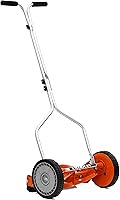
A lightweight manual mower can make sense for a small, smooth lawn if the hill is within your physical ability and mowing conditions are dry. The American Lawn Mower 1204-14 is a 14 in, 4-blade push reel mower with 8.5 in polymer wheels and adjustable cutting height.
It has no powered drive, so you provide all the effort. The mower is suited to grass up to 4 in tall and works less effectively on taller grass.
Choose it for a small lawn with mild, even slopes, not for a steep bank or rough ground. Avoid using it when the grass is wet.
Is a self-propelled mower a better choice for a steep lawn?
A self-propelled walk-behind mower may reduce pushing effort on a larger lawn, but it is suitable only when the exact model's slope instructions allow your terrain. The Greenworks 60V 21 in mower has rear-wheel drive and lets you adjust your pace.
Greenworks describes the mower as suitable for slopes and thick grass. That does not guarantee a safe limit for every hill, so check the manual's slope guidance and route instructions.
Choose it when the mower's stated limits match your lawn and you can keep stable footing while guiding it. Stop if it loses traction or you can't control its pace.
Can a compact 3-in-1 mower handle awkward slopes?
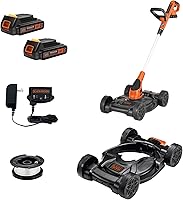
A compact mower can help with small, hard-to-reach areas if its directions permit the slope and you can control it safely. The BLACK+DECKER Weed Eater converts between a trimmer, edger and small mower with a removable wheeled deck.
Its 12 in cutting width and adjustable handle can suit a small area, but its compact design doesn't make a steep slope safe. Use it only within the manufacturer's instructions, on a surface where you can keep firm footing.
Choose it for small areas and tight access, not as a substitute for a mower approved for steep terrain. For a steep bank, consider trimming from a stable position or hiring a professional.
What should you do if your slope is too steep to mow?
Leave a slope alone if your mower's manual prohibits it, the surface is wet or unstable, or you can't maintain control. A rough cut is better than risking a slide or rollover.
For a small area, a string trimmer may let you work from stable ground, but it still needs careful handling and protective equipment. Don't stand below a machine or tool that could slip or roll down the slope.
For a large or difficult bank, ask a lawn-care professional about suitable equipment and access. If the property has a retaining wall, ditch or drop-off, keep a clear buffer rather than mowing close to the edge.
How should you choose a lawn mower for steep hills?
Choose a mower for steep hills by matching its manual's slope limit to your measured terrain, then checking whether you can keep stable footing and control its speed. If the machine doesn't clearly permit the slope, choose another approach.
Pick a push reel mower for a small, smooth area where manual effort is manageable. Pick a self-propelled walk-behind when the model's guidance allows the slope and its drive helps you control your pace; consider a riding mower only when its exact instructions permit your terrain.
For a deeper comparison, read our guide to the best steep slope mower. If the slope is outside the mower's limits or feels unstable, don't mow it with that machine.
Frequently asked questions
What type of mower is safest for steep hills?
Choose a mower whose manual permits your slope and mowing direction. A walk-behind mower can give you direct control, but its weight, drive system, footing and turning space still matter.
If the slope is beyond the mower's limit or feels unstable, don't mow it with that machine.
Are riding lawn mowers good for steep hills?
Some riding mowers are made for slopes, but riding on a hill adds rollover and loss-of-control risks. Check the exact model's slope limit and instructions before considering it, and avoid turning or crossing a slope unless the manual allows it.
A walk-behind may be a better fit for steep or uneven sections.
Can a zero-turn mower mow steep slopes?
A zero-turn mower can be a poor fit for a steep slope if its manual restricts operation there. Its quick steering does not remove the risk of sliding, losing traction or overturning.
Compare the slope guidance for the exact model and choose equipment that lets you keep stable control.
Can a push reel mower cut grass on a hill?
A push reel mower may suit a small, smooth hill if you can keep stable footing and move it without strain. It has no powered drive, so the operator supplies the effort.
Avoid wet grass, steep or rough ground, and conditions where the mower could roll away.