Should You Choose a Zero-Turn Mower for Hills?
A zero-turn mower can suit gentle, open slopes, but it is a poor choice for steep, uneven or wet hills unless its manual approves that terrain. Check the mower’s slope limit, traction, braking and rollover guidance before you buy.
On this page (8 sections)
- Is a zero-turn mower a good choice for hills?
- What makes a hill risky for a zero-turn mower?
- How can you assess a slope before buying?
- Which features matter when comparing zero-turn mowers for hills?
- When should you choose another mower type?
- Which mower options fit smaller or mixed yards?
- How should you mow a hill if the manual allows it?
- What is the best zero-turn mower for hills for your yard?
A zero-turn mower may work on a gentle, even hill, but it is not a safe default for steep or uneven slopes. Check the exact mower’s slope limit, traction guidance and rollover warnings before choosing one.
The phrase “best zero turn mower for hills” can suggest there is one model that fits every slope. In practice, the grade, surface, direction of travel and mower design all affect control.
Start with the hill itself. If the ground is steep, wet, bumpy or has a sharp drop nearby, compare other mower types before considering a zero-turn.
Is a zero-turn mower a good choice for hills?
A zero-turn can suit gentle, open slopes within the mower’s stated limits. Its maneuverability can help on a broad lawn with gradual changes in grade, but that does not make it suitable for every hill.
The rear drive wheels provide traction, while the front wheels guide the machine. On a slope, the balance between grip and steering can change, especially if you turn, cross the grade or encounter loose ground.
A zero-turn also relies on the operator to control each drive wheel. If one side loses grip, the mower may turn or slide in a way that is hard to correct.
Before you shop, check the slope guidance in the owner’s manual for the exact model. If the hill is outside that limit, choose a different machine rather than trying to compensate with slower driving.
What makes a hill risky for a zero-turn mower?
Steepness, uneven ground and low traction raise the risk of sliding or rollover. A hill can look manageable from the top but behave differently when the mower travels across it or changes direction.
Watch for these conditions:
- Wet grass: moisture can reduce tire grip.
- Loose soil or gravel: tires may slip instead of holding a line.
- Ruts and holes: uneven ground can shift the mower’s balance.
- Side slopes: traveling across a hill can affect stability.
- Ditches and edges: a slide or turn can lead toward a drop.
- Sudden turns: quick changes in direction can unsettle the mower.
Never rely on engine power or tire size alone to judge whether a mower can handle a slope. Use the manual’s limits and avoid mowing when the ground is slick or the mower feels unstable.
For a broader comparison of machine types, see what type of lawn mower to choose for steep hills. If you’re comparing riding models, our guide to choosing a riding lawn mower for hills covers the trade-offs.
How can you assess a slope before buying?
Check the steepest section, surface and route before you choose a mower. Measure or estimate the grade, then compare it with the model’s manual and the kind of terrain it permits.
Walk the area when it is dry and look for steep transitions, cross slopes, dips, soft soil and obstacles. Think about where you would turn, stop and travel between sections.
The route matters as much as the average grade. A mostly flat yard can still have one sharp bank beside a ditch or driveway that determines which mower is appropriate.
Do not test a mower on a slope that may exceed its limit. If the manual is unclear, ask the manufacturer or dealer about the exact terrain rather than guessing.
Which features matter when comparing zero-turn mowers for hills?
Prioritize clear slope guidance, traction and predictable control. A feature name alone cannot prove a mower is safe for a particular hill.
Check these details in the manual and specifications:
- Maximum slope guidance: Find the allowed grade and any restrictions on direction or turning.
- Drive system and tires: Look for the traction setup and tire type, then consider the surface you mow.
- Braking and stopping: Learn how the mower slows and what the manual says about stopping on slopes.
- Stability features: Confirm whether the mower includes rollover protection and how it must be used.
- Operator controls: Make sure you can reach and operate controls comfortably while seated.
- Terrain restrictions: Check instructions for wet grass, uneven ground, ditches and other hazards.
A powerful engine or wide deck does not cancel a slope restriction. Choose based on the steepest area you need to mow, not just the flat parts.
When should you choose another mower type?
Choose another type when a hill is steep, uneven, wet or beyond the zero-turn’s manual limit. A walk-behind, suitable riding mower or purpose-built slope mower may offer a better fit, depending on the land.
Compare the best lawn mowers for hills if your yard has a mix of gentle slopes and flatter areas. For a steep grade, use the steep-slope mower guide to consider machines designed for more demanding terrain.
A walk-behind mower can give you more direct control on some slopes, but pushing it can also be difficult or unsafe on a steep grade. Match the machine to the hill, and do not assume that a lighter mower is automatically safer.
If the grass grows along fences, trees or other places a deck cannot reach, a cordless string trimmer with wheels can help with those areas. Keep trimming work separate from mowing decisions on slopes.
Which mower options fit smaller or mixed yards?
For a small or mixed yard, a compact walk-behind or trimmer mower may fit better than a zero-turn. These examples address different yard needs; none is a substitute for checking slope limits or using safe mowing practices.
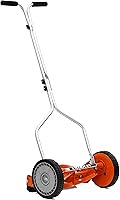
The American Lawn Mower 1204-14 is a manual reel mower with a 14 in cutting width and adjustable blade height from 0.5 to 1.75 in. It is intended for small lawns and is less effective on grass taller than 4 in.
A reel mower needs you to push it, so consider whether the slope is safe to walk and mow. The maker advises avoiding wet grass and cutting no more than one-third of the grass blade.
The Greenworks 60V 21in Self-Propelled Lawn Mower has rear-wheel drive and adjustable pace control. Greenworks says its two 4.0 Ah batteries can cover up to three-quarters of an acre per charge, with performance varying by terrain and technique.
A walk-behind format may be easier to assess on a smaller slope than a riding mower, but its own manual still governs safe use. Consider the route, surface and your ability to guide it before mowing a hill.
The BLACK+DECKER Weed Eater combines a string trimmer, edger and detachable mower deck. Its 12 in cutting width and wheeled deck are aimed at smaller yards, slopes and tight spaces.
A compact tool may help maintain a small patch, but it does not make a steep slope safe to mow. Check the instructions and keep your footing secure.
For background on battery-powered walk-behind machines, read how a cordless lawn mower works. If you are set on a zero-turn for a larger property, compare Ariens zero-turn mowers and zero-turn mowers for 3 acres while checking each model’s slope rules.
How should you mow a hill if the manual allows it?
Follow the mower’s slope procedure exactly and stop if traction or control changes. Mow only when the grass and ground are dry, and keep clear of edges, ditches and obstacles.
The manual may give specific instructions about how to approach a slope, which direction to travel and when to avoid mowing. Those instructions can differ by mower, so do not transfer advice from one model to another.
Keep your speed low and make turns gradually if the manual permits mowing there. If a wheel slips, the mower drifts or you have trouble controlling the machine, stop and reassess from level ground.
Never carry passengers or reach around the mower while it is operating. Use the parking brake and shutdown steps described in the manual whenever you leave the seat.
What is the best zero-turn mower for hills for your yard?
The best zero-turn mower for hills is one whose manual permits your steepest slope and whose controls you can manage on your terrain. If no model fits those conditions, choose another mower type or hire help for the risky section.
Pick a zero-turn for a broad, gentle slope only after confirming its slope guidance and traction setup. Pick a different mower for steep, wet or uneven ground, and use a trimmer for edges and tight spots.
The right decision starts with the hill’s limits, not the mower’s turning radius.
Frequently asked questions
Are zero-turn mowers good on hills?
Zero-turn mowers can work on gentle, even slopes when the operator manual permits that use. Steep, wet, uneven or side-sloped ground raises traction and rollover concerns, so check the mower’s slope guidance and choose another mower type if the hill is outside its limits.
Is a zero-turn mower safe on a steep hill?
A zero-turn is not a safe default for steep ground. The exact limit depends on the mower, tires, surface and operating direction, so use the manual’s slope rules and avoid a slope that feels unstable or exceeds its stated limit.
Should you mow across a hill with a zero-turn?
Follow the mower manual’s direction for slopes because turning and driving across a hill can affect traction and stability. Do not assume one direction is safe for every model; avoid wet grass, abrupt turns and any ground beyond the machine’s stated limits.
What should I use instead of a zero-turn on hills?
Consider a walk-behind mower, a suitable riding mower, or a machine made for steep slopes, based on the grade and terrain. Compare control, traction and the manufacturer’s slope limits before choosing, and use a trimmer for areas a mower cannot reach safely.
Can a zero-turn mower lose traction on wet grass?
Yes. Wet grass can reduce tire grip, making it harder to control a mower on a slope.
Wait for the lawn to dry, and do not mow if the surface is slick, muddy or uneven enough to affect steering or braking.