How to Choose a Cordless String Trimmer with Wheels
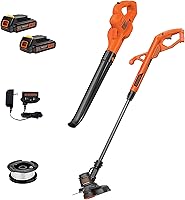
Choose a cordless string trimmer with wheels when you want steadier cutting height and less arm control. Compare support wheels with mower-style attachments, then match the tool to your yard edges, grass and battery system.
On this page (9 sections)
- How to Choose a Cordless String Trimmer with Wheels
- Is a cordless string trimmer with wheels right for your yard?
- Support wheels or mower attachments: which is better?
- How should you match the trimmer to the work?
- How much battery capacity do you need?
- Can a hedge trimmer replace a string trimmer?
- How should you set up and use a wheeled trimmer?
- What care keeps the cutting system ready?
- Which cordless string trimmer with wheels should you choose?
How to Choose a Cordless String Trimmer with Wheels
A cordless string trimmer with wheels suits controlled passes across grass edges, rough patches and open areas where holding a cutting head at one height becomes tiring. It is a practical pick for people who trim the same edges on a regular schedule and want the tool to help keep the line level.
Choose between a support-wheel design and a mower attachment based on how much guidance you need and how often you trim broad sections. A support wheel is usually the simpler step for someone who already trims by hand and wants less guesswork with height.
A mower attachment is a bigger change and makes more sense when open cutting areas are a regular part of the routine.
Wheels help guide the tool, but they do not turn every string trimmer into a lawn mower. You still need to steer around beds, trees, fences and hard surfaces, while keeping the line away from people, pets and fragile plants.
The motor, battery, line and head still set the limits for thick growth.
Think about your yard shape before you decide. Long straight runs beside a path or fence can benefit from a guide that keeps the head from dipping or rising.
Tight corners, raised beds and broken ground can make a wheel feel like one more thing to watch.
Consider who will use the tool most often. Someone new to trimming may find a steady guide reassuring because it reduces constant height corrections.
Someone who moves quickly around obstacles may prefer the freedom of a handheld shaft.
Also think about storage and transport. A wheeled setup may take more space in a shed or garage and may be harder to lift over steps.
If you carry the tool to another property or store it in a tight space, that added bulk matters.
Battery choice still matters with wheels. A guided pass can feel easier on your arms, but cutting dense or wet growth still draws power from the battery.
Match the system to your largest normal job rather than to the promise of wheels alone.
If you are comparing basic trimmer types first, read our string trimmer weed eater guide. For lighter handheld options, see the best lightweight string trimmer guide.
Is a cordless string trimmer with wheels right for your yard?
A wheeled design is most useful when you have longer, fairly open passes where a steady cutting height matters. It is less useful when most of your work takes place around narrow borders, posts, rocks or irregular planting beds.
The key question is whether the ground and layout let the wheel roll where you need to cut.
Think about the jobs you repeat each week:
- Cutting grass that grows beyond a mower's reach
- Cleaning the edge beside a driveway or walkway
- Trimming a rough strip where a mower cannot fit
- Clearing growth around fences, sheds or trees
- Cutting back small areas without carrying a full mower
Look at how often each job comes up. A weekly edge beside a long walkway may justify a guided setup more than an occasional tidy around a single tree.
If most tasks involve short turns and close steering, a handheld tool may be quicker to position.
A wheel can act as a depth and height guide while you move forward. That makes the tool easier to position for repeated passes, but the wheel can also catch on roots, gaps and uneven paving.
Smooth ground helps the wheel do its job, while broken surfaces can make the head bounce or dig in.
Consider slopes as well. A wheel rolling downhill may speed the tool forward and make height control harder.
On a slope, slower passes and shorter sections are safer than trying to keep one long line.
Think about plantings and hard edges too. Wheels need clearance to move, and that clearance may not exist beside raised beds, edging stones or fence posts.
In those spots, lifting and steering by hand often gives better control.
Choose wheels for control, not for extra cutting power. The motor, battery, line diameter and cutting head still determine how the tool handles grass and weeds.
If the growth is heavy, a guided tool may still slow down or need frequent line checks.
Support wheels or mower attachments: which is better?
Support wheels are better for guided trimming with a familiar trimmer, while mower attachments are better when you want a broader, more structured cutting setup. The right choice depends on whether the wheel supports the head or becomes part of a larger attachment system.
A support-wheel design usually keeps the trimmer's basic role intact. You guide the shaft, set the head over the work area and let the wheel help maintain position during a pass.
A mower attachment may change how the tool sits and moves. It can be useful for open grass, but you must confirm that the attachment is designed for your exact trimmer and that the combined setup remains balanced.
What does a support wheel help with?
A support wheel helps you hold a more consistent cutting height while trimming along an edge or across a narrow grass strip. It can also reduce the amount of time you spend floating the head at the correct position by hand.
The wheel works best when the ground is reasonably smooth. On slopes or broken ground, the wheel may move differently from the cutting head, so slow passes and frequent corrections are safer.
A wheel is not a substitute for line control. Keep the head away from hard surfaces unless the head and line are intended for that work, and stop when debris or tangled growth needs attention.
What does a mower attachment change?
A mower attachment can make the trimmer feel more like a guided cutting tool for open grass areas. It may also make the setup less useful around tight corners because the attachment needs room to move.
Check the mounting method, shaft type and head connection before choosing one. Compatibility is not guaranteed just because the attachment is described as universal.
If you are deciding between a cordless trimmer and a mower, our guide to how a cordless lawn mower works explains the role of the motor, battery and cutting system.
How should you match the trimmer to the work?
Match the tool to the shape of the yard and the thickness of the growth, not just the promise of wheels. A light edge-trimming job has different needs from dense weeds or repeated brush cutting.
Use this simple guide:
| Yard task | Useful setup | Main trade-off |
|---|---|---|
| Straight grass edges | Support wheel and controlled line head | Less flexible in tight spaces |
| Open rough strips | Mower-style attachment | Needs room and confirmed compatibility |
| Fence and tree edges | Handheld shaft with careful steering | More arm control |
| Dense weeds | Suitable line diameter and head | More load on the battery |
| Mixed beds and paths | Lightweight handheld trimmer | More frequent height correction |
A wheeled trimmer can cover open strips efficiently, but it may be awkward beside raised beds or irregular borders. For those areas, a lightweight cordless model may be easier to turn and lift.
Compare options in our best lightweight cordless string trimmer guide.
How does line diameter affect the choice?
Line diameter affects how you match the head to the work. A thicker line can suit heavier trimming when the head supports it, while a smaller line may be easier to control for lighter grass.
The Husqvarna T35 replacement head holds 28 ft of .095 in line and is compatible with .065 to .105 in trimmer line. Its split spool is designed to reduce tangling, and the spool comes off with the cap for reloading.
The T35 is a head replacement, not a wheeled trimmer or mower attachment. Use it only with a compatible straight-shaft trimmer and confirm the head connection before setup.
When is a pivoting line head useful?
A pivoting line head can help when your trimming path includes hard edges and obstacles, provided the head fits the trimmer. The Weed Warrior PivoTrim accepts .080 and .095 in line, uses 6 pivoting lines and includes premium pre-cut trimmer line.
Its metal material and pivoting design are aimed at repeated trimming, edging and brush cutting. It does not add wheels, battery power or mower guidance, so you still need to control the shaft and cutting height.
The PivoTrim is a head replacement rather than a complete trimmer. Check the connection and line requirements before pairing it with a cordless tool.
How much battery capacity do you need?
Battery needs depend on grass thickness, line size, cutting width, terrain and the amount of time the head stays under load. A wheeled setup may make movement easier, but it does not guarantee longer runtime.
For a small yard, focus on a battery system that is easy to charge and store. For larger areas, consider whether you can use a spare compatible battery without changing tools.
Dense growth and repeated contact with rough vegetation can use more energy than light edging. Wet or tall grass can also make the tool work harder, so treat advertised runtime as a planning reference rather than a fixed promise.
Read what determines cordless mower runtime for the same battery factors in mower-sized equipment.
Choose the battery around your largest normal job. If you only trim a few edges, a smaller system may be easier to carry.
If you clear open strips often, battery interchangeability can matter more than a compact tool.
Can a hedge trimmer replace a string trimmer?
A hedge trimmer cannot replace a string trimmer for ground-level grass and weed edging. Its blade is designed for hedge branches and shrub shaping, so the cutting motion and safe work area are different.
The BLACK+DECKER LHT2220 is a 20V cordless hedge trimmer with a 22 in alloy-steel dual-action blade. It includes the Lbxr20 battery, Lcs20 charger, trimmer and operating instructions, and it cuts branches up to 3/4 in thick.
Its wrap-around front handle, soft grip and full-length trigger are aimed at controlled vertical and horizontal hedge trimming. The product has a 20V battery system and a 2-year warranty.
This tool belongs in a hedge-trimming plan, not a string-trimmer wheel setup. If your main task is shrub shaping, compare it with our best EGO string trimmer coverage only after deciding whether you need a string head or hedge blade.
How should you set up and use a wheeled trimmer?
Set up the tool on a clear, level section first, then check that the wheel, shaft and cutting head move together without rubbing. Read the tool and attachment instructions before starting, especially when a mower attachment changes the balance.
Use this sequence:
- Remove stones, wire, toys and loose branches from the work area.
- Check that the battery is installed correctly and the guard is in place.
- Confirm the line or head matches the trimmer and the planned work.
- Set the wheel or attachment height before the motor starts.
- Start at a slow walking pace and keep both hands on the controls required by the tool.
- Keep people and pets away from the cutting path.
- Stop the motor before clearing wrapped grass or changing line.
Keep the wheel on the intended side of the cutting head during a pass. If the wheel lifts, catches or pulls toward an obstacle, stop and reposition rather than forcing the tool forward.
A wheeled trimmer still throws cut material and small debris. Wear eye protection, long pants and suitable footwear, and avoid trimming toward windows, vehicles or exposed legs.
What care keeps the cutting system ready?
Basic care means cleaning the head, checking the line and storing the battery and tool correctly. Do not leave wrapped grass around the head because it can affect balance and cutting control.
A few minutes after each session can make the next start easier and keep the cutting path more even.
After each use, remove grass from the guard and wheel area once the tool is off and safe to handle. Use a stick or brush rather than fingers near the line, and wait until the head has fully stopped.
Clear packed material from around the shaft hub as well so the head can spin freely.
Inspect the line for uneven wear, then reload or replace it when the cutting path becomes inconsistent. A head that cuts wider on one side can leave a rough edge and make a wheeled pass harder to keep straight.
Replace line before it becomes too short to reach the intended cutting width.
For replacement heads, follow the fit and line limits. The Husqvarna T35 is designed for compatible straight-shaft trimmers, while the Weed Warrior PivoTrim accepts .080 and .095 in line and uses pre-cut line.
Do not force a head onto a shaft it was not made for, and check the connection before the motor starts.
Keep the head and wheel free of moisture where possible. Dry storage helps reduce rust on metal parts and prevents grass from hardening into a solid mass around the guard.
If the tool gets wet, let it dry before putting it away.
Store the battery according to the trimmer maker's instructions. Keep it at a moderate temperature and away from the cutting head so it does not get knocked or damaged in storage.
A charged battery stored correctly is ready when you need it, while a battery left in a hot shed may not hold up as well.
Check fasteners before the next session if the wheel or mower frame has been removed and reinstalled. Tighten connections evenly and make sure the wheel turns without rubbing the shaft or guard.
A loose guide can wobble during a pass and make height control worse.
Also check the guard and line cutter after heavy work. Dull or damaged parts can snag line and make reloading more frequent.
Small fixes at this stage are easier than dealing with a head that fails mid pass.
Keep the shaft and handles clean and dry too. Dirt around the controls or battery contacts can make the tool harder to grip and start.
A quick wipe after use keeps the tool ready without adding much time to your routine.
Which cordless string trimmer with wheels should you choose?
Choose a support-wheel trimmer for controlled grass passes, especially when you want help holding a steady height without changing the tool's basic job. Choose a mower attachment when you regularly clear open areas and have confirmed compatibility with the trimmer.
Pick a replacement head when the existing head is the limiting part. The Husqvarna T35 emphasizes easy reloading and .095 in pre-wound line, while the Weed Warrior PivoTrim focuses on pivoting lines and pre-cut replacements.
Choose the BLACK+DECKER LHT2220 only for hedge work. Its 22 in blade, 20V battery and included charger make it a separate shrub-trimming tool, not a cordless string trimmer with wheels.
For smaller users or longer sessions, compare the best lightweight string trimmers for women guide. If you are weighing gas against battery power, see the best lightweight gas string trimmers on sale guide.
The final decision is simple: use wheels when they improve your control on the ground you actually trim. If most of your work is tight, uneven or close to obstacles, a well-matched handheld trimmer may be easier to steer.
Frequently asked questions
Is a cordless string trimmer with wheels better than a handheld trimmer?
A cordless string trimmer with wheels can give you steadier contact with the ground and more controlled trimming along open edges. A handheld trimmer is usually easier around posts, fences, beds and uneven ground.
Choose wheels for repeated straight passes, or handheld control for detailed work.
Can a string trimmer be used like a mower?
Some string trimmers use support wheels or mower-style attachments to guide the cutting head, but they are not automatically equal to a cordless mower. Check the attachment design, cutting path and intended use before treating one as a mower substitute.
What should I look for in a cordless string trimmer with wheels?
Look for a stable wheel position, a cutting head that stays at the desired height, a battery system that matches your yard and controls you can reach safely. Also check whether the tool is meant for edging, trimming, brush cutting or broader grass work.
Do wheels make string trimming easier?
Wheels can reduce the need to hold the cutting head at a constant height during longer passes. They do not remove the need to steer, avoid obstacles and manage the spinning line.
Uneven ground, slopes and tight spaces may still favor a handheld trimmer.
Can I add wheels to any cordless string trimmer?
No. Wheel kits and mower attachments depend on the trimmer's shaft, head and mounting design.
Confirm compatibility before buying an attachment, and do not assume that a universal replacement head also fits a wheel guide or mower conversion.