String Trimmers and Edgers: Complete Buying Guide
The best string trimmer weed eater depends on your yard, power source and edging needs. Compare cordless, gas and electric designs by cutting width, line system, shaft shape, balance and border work before you buy.
On this page (14 sections)
- Which string trimmer weed eater is right for your yard?
- What are the main types of string trimmers?
- How do cutting width and speed affect daily work?
- What is the best string trimmer line diameter?
- Is a straight shaft or curved shaft trimmer better?
- How does a string trimmer become a lawn edger?
- What should you know about handles and balance?
- Which battery features matter most?
- What products fit different trimming needs?
- Which brands and attachments are worth comparing?
- How should you use and maintain a string trimmer?
- How do you choose between trimming and edging?
- Explore string trimmers & edgers by topic
- Final decision: which string trimmer weed eater should you buy?
The best string trimmer weed eater depends on your yard, power source and edging needs. Cordless models suit many home yards, gas tools fit longer or heavier work, and electric designs work well where an outlet is practical.
Start with the work you do most often. Weekly trimming around beds and fences calls for different balance and weight than cutting tall growth along a large lot.
A string trimmer cuts grass and weeds with rotating nylon line. It handles places a mower cannot reach, such as posts, trees, steps and garden borders.
An edger creates a cleaner border along a sidewalk, driveway or garden bed. It works in a more vertical position, so control and guidance matter more than raw speed.
Some tools do both by rotating the head, changing shaft position or adding a wheel. That flexibility can save money and storage, but a dedicated tool may feel better for frequent edging.
Power source affects daily use in practical ways. Cordless tools bring freedom of movement and simple starting, while gas tools support longer sessions away from charging points.
Corded electric tools offer steady power near an outlet. They can suit a compact front yard, though the cord can limit movement and needs care near the cutting area.
Weight and balance deserve early attention. A tool that seems light in the shop can feel tiring after repeated use, especially on slopes or around raised beds.
Cutting width also shapes comfort and control. A narrower head helps around plants and ornaments, while a wider head covers open grass with fewer passes.
Line feed style affects interruptions during the job. Automatic, bump and command systems suit different habits, so consider how often you want to stop for line.
The terms overlap in everyday speech. Our guide to weed eater vs trimmer explains why the names can describe the same type of tool.
Use that guide as a starting point, then focus on specs that match your lawn. Shaft style, battery plan, head control and edging method will matter more than the label alone.
Check setup and care needs before you buy. Confirm the line diameter, spool loading method and safe storage for batteries or fuel.
Honest trade-offs help avoid disappointment. A versatile 2 in 1 tool may handle both jobs well, yet a dedicated tool can feel better when one task dominates your routine.
Choose the format that fits your yard size, storage space and work habits. The right trimmer should feel manageable at the handle and suit the growth you cut most often.
Which string trimmer weed eater is right for your yard?
Choose a cordless trimmer for routine maintenance, a gas model for extended heavy growth, or a corded electric model for smaller areas close to an outlet. Then match the shaft, cutting width and line system to your height and lawn edges.
Your best choice usually comes down to 5 questions:
- How much grass and weed growth do you cut?
- How far is the work area from an outlet?
- Do you need edging along hard surfaces?
- Will you carry the tool for long periods?
- Do you already own batteries in a compatible tool system?
A small yard with regular maintenance needs less power than an overgrown lot. A narrow cutting width can give you more control around plants, while a wider width can cover open grass faster.
For a cordless mower comparison, see How Does a Cordless Lawn Mower Work?. The same battery-platform idea can affect how useful a cordless trimmer becomes over time.
What are the main types of string trimmers?
The main types are cordless battery, corded electric and gas-powered trimmers. Each type trades runtime, movement, noise, weight, maintenance and cutting strength in a different way.
Cordless battery trimmers
Cordless trimmers use rechargeable batteries and have no power cord during work. They can suit suburban yards, quick touch-ups and users who value simple starting.
Battery tools are easiest to compare by more than voltage. Check battery capacity, the number of batteries, charger inclusion and whether the battery works with other tools you already own.
A 20V tool can be enough for regular home trimming, but voltage alone does not predict total runtime. Cutting width, grass density, line diameter and how often you stop also affect how long a charge lasts.
Our best cordless string trimmer guide compares cordless options for different yard routines.
Corded electric trimmers
Corded tools use household electricity through an extension cord. They can provide steady power for areas near an outlet, but the cord limits movement and needs careful handling.
A corded design may fit a small front yard where the outlet is easy to reach. It becomes less convenient around trees, fences, beds and detached areas.
Keep the cord away from the cutting head and your travel path. Use an extension cord suited to outdoor use, follow the tool's instructions and protect the connection from moisture.
Gas trimmers
Gas trimmers use fuel and can work far from an outlet or charged battery. They may suit large properties, long sessions and dense growth, but they bring fuel handling, engine maintenance and more noise.
Compare gas vs electric weed eaters if you are deciding between constant fuel power and simpler electric upkeep. A second comparison of gas vs battery weed eaters can help when your main concern is runtime away from an outlet.
Gas does not automatically mean better for every yard. A tool that is heavier or harder to start can be a poor match for short weekly trimming.
How do cutting width and speed affect daily work?
A wider cutting width covers more grass per pass, while a narrower width gives better control around obstacles. Motor speed and transmission design affect how the tool transfers power to the cutting line.
The WORX model below has a 12 in cutting diameter and a 7,600 rpm no-load speed. The BLACK+DECKER LST300 also has a 12 in cutting swath and a 6,200 rpm speed.
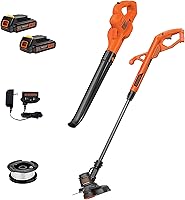
The BLACK+DECKER LCC222 has a 10 in cutting width. Its smaller width can give you a little more control in tight spaces, while its combo format also includes a sweeper and 2 batteries.
A wider head is useful in open areas, but it can make it easier to strike plants or landscape borders. Keep the cutting head level and let the line do the work instead of forcing the tool into thick growth.
What is the best string trimmer line diameter?
The best string trimmer line diameter is the size approved for your tool and the kind of growth you cut. Thin line can suit light grass, while thicker line may last longer in heavier weeds if the trimmer supports it.
The WORX WG163 uses 0.065 in line and has a 10 in cutting line length. The correct spool matters because line-feed systems are designed around a particular diameter and winding pattern.
See our guide to the best string trimmer line before replacing line. If your existing head is worn or damaged, compare the best string trimmer head replacement options for your tool.
Do not guess based only on appearance. Check the manual, spool label or tool markings before loading replacement line.
Automatic, bump and command-feed systems
Automatic feed systems release line as needed without bumping the head. A bump-feed system releases line when you tap the head against the ground.
A command-feed system lets you release line with a control.
The WORX uses a push-button Command Feed spool system. The BLACK+DECKER LCC222 and LST300 use automatic feed systems.
Each system has a different feel during work. Automatic and command-feed designs can reduce interruptions, while bump-feed systems give you direct control over when line is released.
Line is a consumable part. Keep the correct replacement spool or line available so a small maintenance task does not stop the job.
Is a straight shaft or curved shaft trimmer better?
A straight shaft trimmer is usually the better fit for reach, taller users and work under shrubs. A curved shaft can be easier to handle in small areas and may feel more compact in storage.
The right choice depends on balance as much as reach. A tool that feels comfortable at the handle can still become tiring if the head is difficult to control.
Read our straight shaft vs curved shaft trimmer comparison before choosing a style. You can also compare the best straight shaft string trimmer options if reach is your main concern.
When should you choose a lightweight trimmer?
Choose a lightweight trimmer when you trim often, carry the tool around garden beds or find prolonged overhead work tiring. Weight still needs to be balanced against cutting width, battery size and the type of weeds you cut.
The WORX tool weighs 5.5 lb. The BLACK+DECKER trimmer weighs 5.7 lb, while the LCC222 combo's listed item weight is 10.5 lb for the kit.
Our best lightweight string trimmer guide focuses on carrying comfort and control. Look for adjustable handles or height settings when more than one person uses the tool.
How does a string trimmer become a lawn edger?
A string trimmer becomes a lawn edger when its head or shaft can be placed for vertical cutting along a border. A wheel or guide can help keep the cutting line at a consistent distance from a sidewalk or driveway.
The WORX converts from trimmer to edger and has rubberized wheels to guide the edger. Its head tilts 90 degrees, and its adjustable spacer guard helps protect plants and lawn ornaments.
The BLACK+DECKER LCC222 rotates its trimmer head 180 degrees for wheeled edging. The LST300 converts from trimmer to edger and has adjustable height and handle positions.
If you mainly need a crisp hard-surface border, compare the best lawn edger options. If you want one tool for several jobs, the best trimmer edger combo guide may be more useful.
What is a lawn edger used for?
A lawn edger cuts a visible boundary where grass meets a sidewalk, driveway, patio or garden bed. It differs from ordinary trimming because the cutting line works in a vertical position instead of sweeping across the lawn surface.
Use a guide wheel when available, and move slowly near paving, stone and decorative borders. Contact with hard surfaces can wear line faster and can make the tool harder to control.
For soft garden edges, keep a safe distance from flowers, shrubs and ornaments. A spacer guard can help, but you still need to guide the tool carefully.
What should you know about handles and balance?
Look for an adjustable handle, adjustable shaft or head position that lets you keep the cutting head at a comfortable angle. Good balance helps you guide the line without twisting your wrists or lifting the tool unnecessarily.
Handle position matters more as trimming time increases. Set the tool so the head stays near the ground while your arms remain relaxed.
A shoulder strap can help with some larger trimmers, but do not assume every tool includes one. Check the tool's included components and instructions before planning around an accessory.
What is the best string trimmer for a small yard?
The best string trimmer for a small yard is usually a light cordless or corded model with a manageable cutting width. A compact tool can be easier to store and control around paths, beds and fences.
The WORX 20V model is a 5.5 lb cordless trimmer and edger with a 12 in cutting diameter. Its 2 included batteries can also be used across the WORX Power Share family.
The BLACK+DECKER LCC222 combines a 10 in trimmer with a sweeper and 2 batteries. It may suit a homeowner who wants to handle light trimming and hard-surface debris with one kit.
Compare the best budget string trimmer choices if your priority is basic yard upkeep. For brand-focused comparisons, see the best string trimmer brands guide.
Which battery features matter most?
Battery capacity, battery count and platform compatibility matter more than voltage alone. A kit with 2 batteries can reduce waiting between tasks, while a single battery may suit short trimming sessions.
The WORX kit includes 2 20V Power Share maxLithium batteries and a 20V charger. The batteries work with WORX 20V and 40V Power Share tools.
The BLACK+DECKER LCC222 includes 2 20V MAX lithium-ion batteries. The LST300 includes 1 20V MAX lithium-ion battery pack rated at 2.0 amp hours and a charger.
Read the best EGO string trimmer, best DEWALT battery string trimmer, best ECHO weed eaters, best Worx string trimmer edger and best Ryobi cordless string trimmer guides if you already use one of those tool families.
What products fit different trimming needs?
The best product depends on the work you need to do. The products below cover cordless trimming, edging, a trimmer and sweeper combo, and a separate outdoor stove that does not belong in the trimmer category.
WORX 20V 12 in 2-in-1 cordless string trimmer
The WORX WG163 suits buyers who want one cordless tool for trimming and edging. It has a 12 in cutting diameter, 0.065 in line, a 5.5 lb machine weight, a 90-degree tilting head, support wheels and an adjustable spacer guard.
It includes the trimmer, safety guard, flower guard, charger, 2 batteries, edger wheel, spool and spool caps. WORX says the batteries work with its 20V and 40V Power Share tools.
Its trade-off is platform commitment. It makes the most sense when the included batteries or wider Power Share family match your other yard tools.
BLACK+DECKER 20V MAX Weed Eater, Edger and Sweeper Combo
The BLACK+DECKER LCC222 suits buyers who want trimming, edging and sweeping in one cordless kit. The trimmer has a 10 in cutting width, automatic line feed, adjustable height and handle, and a 4.5 lb trimmer design.
The kit includes 2 batteries and a charger. Its sweeper is described as a 130 mph hard-surface leaf blower and weighs 3.7 lb.
BLACK+DECKER describes the batteries as 20V MAX lithium-ion units with 1.5 amp hours.
The trade-off is the narrower 10 in cutting width. That can help with control, but open areas may take more passes than a 12 in tool.
BLACK+DECKER 20V MAX String Trimmer and Edger
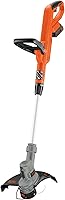
The BLACK+DECKER LST300 suits buyers who want a 12 in cordless trimmer and edger with a 2.0 amp hour battery. It has a 6,200 rpm speed, automatic line feed, adjustable height and handle positions, and a wall-mountable charging base.
It includes the LST300 trimmer and edger, 1 battery, charger, AF-100 spool and guard. BLACK+DECKER describes the tool as part of its 20V MAX Powerconnect system.
The trade-off is that it includes 1 battery rather than the 2 batteries supplied with the WORX and LCC222 kits. That may be enough for short sessions, but longer work can make battery planning more important.
Gas One GS-3400P propane or butane stove
The Gas One GS-3400P is not a string trimmer, weed eater or lawn edger. It is a separate portable camping stove, so it does not solve a yard-trimming need and should not be compared with the cordless trimmers above.
It uses propane or butane, has an adjustable heat dial and automatic piezoelectric ignition, and includes a carrying case. The stove is made from alloy steel and metal and weighs 3.1 lb.
Gas One describes compatibility with a single 8 oz butane cartridge or a 16.4 oz propane cylinder, with fuel not included. Its pressure sensor cartridge ejection system and gas-flow shutoff are safety features for stove use, not trimmer features.
Which brands and attachments are worth comparing?
Brand choice matters when you want to share batteries, chargers or replacement parts. Attachment systems matter when you want one powerhead to handle more than trimming.
Compare battery family before comparing color or headline voltage. A tool that fits batteries you already own may be more useful than a slightly wider tool that starts a new platform.
Our best weed eater attachments guide covers multi-use setups. Attachments can add flexibility, but check compatibility with the exact powerhead and avoid assuming that one brand's attachment fits another.
For heavier weeds, a brush cutter can be a better tool than a light string trimmer. See the best brush cutter guide when grass has become tall, woody or difficult to cut with ordinary line.
A salt spreader is a different category again. If you are planning winter property care, use our best broadcast spreader for salt guide instead of trying to adapt a trimmer.
How should you use and maintain a string trimmer?
Use eye protection, sturdy shoes and the guard supplied for the tool. Inspect the area for stones, wire, glass and other objects before starting, then keep people and pets away from the cutting path.
Our guide on how to use a string trimmer covers body position, trimming direction and edging technique. The key is to guide the head steadily and avoid forcing the line into hard surfaces.
Before each session:
- Check the guard and cutting head for damage.
- Confirm the battery is seated or the fuel system is ready.
- Make sure the line diameter matches the tool.
- Inspect the work area for objects.
- Adjust the handle or shaft for comfortable control.
After use, remove grass from the guard and head. Store the tool dry, keep batteries according to their instructions and replace worn line before the next job.
For gas tools, follow the engine and fuel instructions. For cordless tools, use the correct charger and battery family.
For corded tools, inspect the cable and extension connection before use.
How do you choose between trimming and edging?
Choose trimming when you need to cut grass around fences, trees, beds and posts. Choose edging when you need a visible boundary along a hard surface or a defined garden border.
Trimming is usually the everyday task. It keeps growth tidy where a mower cannot pass and can be needed every week during the growing season.
Edging is more about appearance and definition. A clean line along a path or driveway can make the whole lawn look maintained, even when the grass itself is short.
Many yards need both tasks. A convertible tool can save storage space, but a dedicated edger may be better if crisp borders are your main priority and you edge often.
Think about how often you edge, not just how often you trim. If borders are a weekly part of your routine, a wheel, stable head position and easy guidance deserve real priority.
If you edge only a few times each season, trimming comfort may matter more. Balance, line feed, battery runtime and handling around plants will affect most of your sessions.
Start with the most common job. If you trim open grass every week and edge only a few times each season, prioritize balance, line feed and battery runtime.
That order helps you avoid buying for a rare task at the expense of daily comfort. A tool that feels good for trimming will more likely stay in use through the season.
If borders define the look of your yard, prioritize the edging position, wheel and head control. Guide wheels can help you follow a straight path, but they still need slow and steady movement.
Head control matters on both jobs. On slopes, the head can drift, so a design that tilts or rotates easily may help you keep the line where you want it.
Shaft and handle setup also affect edges. Adjustable height and handle positions can help different users keep the cutting line level without bending or reaching too far.
Consider the surfaces around your lawn. Short paths and small beds may suit a narrower tool, while long driveways may benefit from a design made for straight guided passes.
Safety and care differ slightly between tasks. Edging brings the line closer to paving and stone, which can wear line faster and throw debris if you move too quickly.
Walk the border before starting. Remove stones, wire and other objects, and keep a safe distance from plants, ornaments and landscape features.
Storage is another honest trade-off. One convertible tool reduces clutter, but a separate edger can save switching time when both jobs are on your regular list.
Battery planning matters when you do both jobs in one session. Trimming and edging back to back can use more charge than either task alone, so extra batteries may be worth considering.
Match the tool to your yard layout. Homes with many beds and posts need control for trimming, while homes with long hard edges need guided precision for edging.
In the end, choose based on frequency, surface and comfort. The best choice handles your most common job well and still makes the other job manageable.
Explore string trimmers & edgers by topic
Use these topic links to keep narrowing your choice. They point to roundups that focus on overall performance and on replacement line for a specific brand.
Start with the general roundup if you are still comparing power sources, cutting widths and edging options. Move to the line guide once you know the line diameter your trimmer requires.
Final decision: which string trimmer weed eater should you buy?
Pick a cordless string trimmer weed eater when you want easy starting and free movement around a typical home yard. Pick a gas model when your work area is large, remote or regularly overgrown, and pick corded electric when an outlet is close and steady power matters most.
For one cordless tool that combines trimming and edging, the WORX WG163 offers a 12 in cutting diameter, 2 batteries, guide wheels and a tilting head. For a trimmer plus sweeper kit, the BLACK+DECKER LCC222 adds a 10 in trimmer, edging conversion and 2 batteries.
The BLACK+DECKER LST300 is a straightforward 12 in trimmer and edger with automatic line feed and 1 battery. Start with the tool's line size, weight, battery plan and edging method, then choose the format that matches the work you actually do.
Frequently asked questions
What is the difference between a string trimmer and a weed eater?
String trimmer is the general name for a handheld tool that cuts grass and weeds with rotating line. Weed Eater is a brand name that many people use as a general term.
Compare the tool's power source, cutting width, shaft, line system and edging features rather than relying on the name alone.
What size string trimmer line should I use?
Use the line diameter approved for your trimmer. Smaller line can suit light grass, while thicker line may handle heavier growth when the tool supports it.
Check the manual or spool markings before loading line, because the wrong diameter can affect feeding, cutting and motor load.
Is a straight shaft or curved shaft trimmer better?
A straight shaft trimmer usually gives more reach and can suit taller users or work beneath shrubs. A curved shaft often feels lighter and more compact for small yards.
Choose based on your height, trimming angles, storage space and the type of growth you cut most often.
Can a string trimmer edge a lawn?
Some string trimmers convert to an edger by rotating the head or changing the tool position. A wheeled guide can make a straight border easier to follow.
If the tool does not have an edging position, use it for grass trimming only and choose a dedicated lawn edger for hard borders.
What should I look for in a cordless string trimmer?
Look at battery platform, cutting width, line diameter, line-feed method, tool weight and included batteries. A cordless model can suit routine grass trimming when you already use the same battery family.
For larger areas, compare the number and capacity of batteries with the time you expect to work.