Which Edger Attachment Fits a Lawn Tractor?
Most lawn tractors do not accept a universal edger attachment. Check the tractor's approved implements, mounting system, clearance and power source before choosing a lawn edger attachment for a lawn tractor.
On this page (9 sections)
- Which Edger Attachment Fits a Lawn Tractor?
- Does a lawn tractor use a standard edger attachment?
- What should you check before choosing a lawn edger attachment?
- Is a walk-behind edger better than a tractor attachment?
- Which tools can replace a lawn tractor edger attachment?
- Which alternative fits your edging job?
- How do you check lawn tractor compatibility?
- Can a lawn tractor edge beside sidewalks and beds?
- What is the final choice?
Which Edger Attachment Fits a Lawn Tractor?
Most lawn tractors do not accept a universal edger attachment. Before choosing an edger attachment for a lawn tractor, check the tractor's approved implements, mounting points, clearance, power source and steering control.
That check matters more than the word attachment on a listing. Two tractors can look alike and still use different frames and brackets.
A lawn tractor is built mainly to tow or carry compatible equipment. It is made for mowing, hauling and approved implements fitted by the maker.
An edger is usually a separate walk-behind tool. It needs direct control beside concrete, soil and planting beds.
Adapting a walk-behind edger to a tractor can create fit, control and safety problems. The cutting head may sit in the wrong place or move with the tractor in ways you cannot correct in time.
Before you buy anything, read the tractor manual and the approved implement list. Note the exact model number, deck type and any front or rear mount points.
Measure the area around the front wheels and mower deck. You need to know how much space is free without touching steering parts or tires.
Check the power question early. Some implements use tractor power, some bring their own motor, and some do not need power at all.
Know your actual job before you pick a tool type. Light trimming beside a path is a different task from a clean vertical edge or deeper trenching.
A string trimmer with an edging mode suits light work and grass around posts and trees. A wheeled edger helps you hold a straighter line along a sidewalk.
A dedicated blade edger cuts a firmer edge and can trench shallow lines for wire or border repair. That work suits repeated use along the same runs.
For general tool choices, our string trimmer weed eater guide explains how trimming and edging tools differ.
Use that guide to decide if you need trimming, edging or both in one tool. Then match the tool to the border material and the length of the run.
If your tractor has no approved edger, a separate tool is often simpler. It avoids uncertain mounting changes and gives you direct sight of the cutting line.
Keep the tractor for mowing and hauling. Let a walk-behind tool handle the narrow borders where control matters most.
Does a lawn tractor use a standard edger attachment?
There is no universal lawn tractor edger attachment standard. Tractor attachments are usually tied to a specific brand, model family or mounting system.
That means a part that fits one tractor may have no maker approval for another. Matching by size alone is not enough.
Before shopping, identify:
- The tractor's exact model and deck configuration
- The approved front, side or rear attachment points
- The attachment's required hitch or bracket
- The available ground clearance
- The attachment's working width
- Whether the tractor supplies power to that attachment
- How the attachment is raised, lowered and disengaged
Write down each answer from the manual or maker catalog. If any answer is missing, treat the fit as unconfirmed.
A deck-mounted blade is not automatically an edger. A mower deck cuts across the lawn, while an edger cuts along a border.
The shape of the cut is different. One passes over the surface, and the other follows a line beside a path or bed.
The attachment must place its cutting part at the correct angle and position. A small offset can leave a strip of grass or strike concrete.
Check the working width against the space beside the tire. The tire must stay clear of curbs, beds and landscape edging while the tool does its work.
Do not assume that a tow-behind implement can edge a sidewalk. Towed tools generally follow behind the tractor, while edge work often needs the cutting head close to the tractor's side or front.
A rear tool can also swing wide on turns. That makes tight corners and curved beds harder to control from the seat.
Front mounts can improve visibility, but only when the maker approves them. An unapproved front bracket may affect steering clearance or balance.
Ground clearance deserves a careful look. Curbs, uneven soil and driveway transitions can catch a low mounted blade.
Also check the travel position. You need enough lift to cross from one work area to another without dragging the cutting head.
Power is another dividing line between models. Some tractor implements are driven by the tractor, and others carry a separate engine or motor.
Never add a belt, shaft or electrical connection on your own. The tractor and attachment must have been designed to work together.
If the maker does not list an edger for your tractor, accept that limit. A separate walk-behind edger will usually do the border work with less risk.
What should you check before choosing a lawn edger attachment?
Mounting and clearance matter more than the attachment name. A compatible attachment must fit the tractor and leave safe space around wheels, steering parts, the mower deck and the operator.
Mounting method
Look for the tractor's approved mounting method first. Common arrangements may include front mounts, rear hitches, deck connections or model-specific brackets.
A rear hitch can tow an implement, but it may not position the blade beside the lawn border. A front mount may improve visibility, but only if the tractor manufacturer approves that type of attachment.
Cutting position
The cutting head must reach the edge without placing the tractor's tires on a curb or garden bed. Check the attachment's offset, width and adjustment range.
A tool that sits too far inward may leave an uncut strip. One that sits too far outward may strike concrete, plants or landscape edging.
Ground clearance
Measure the lowest parts of the tractor and attachment. Curbs, uneven soil and driveway transitions can catch a low-mounted blade.
Also check the attachment's travel position. You need enough clearance to move between work areas without dragging the cutting head.
Power connection
Some tractor attachments rely on the tractor's own drive system. Others use a separate engine or motor.
The tractor must be designed to supply the required power or tow the implement safely.
Never add a belt, shaft or electrical connection without confirming that the tractor and attachment were designed to work together.
Is a walk-behind edger better than a tractor attachment?
A walk-behind edger is usually easier to match to a normal lawn because it does not depend on tractor compatibility. You can see the cutting line directly and guide the tool along sidewalks, driveways and planting beds.
That direct view is the main practical gain. You can slow near a corner, stop at a drain or step around a sprinkler head.
A tractor attachment, even an approved one, adds limits. Tire position, turning radius and seat height all shape how well you can follow a border.
A dedicated edger suits repeated border work. It holds its line along the same path week after week and gives a firm vertical edge.
Compare the tradeoffs in edger vs string trimmer. The choice comes down to how deep and how clean you need the edge to be.
A wheeled edger helps when the run is long and straight. The wheels carry the tool and keep the head at a steady distance from the border.
A handheld trimmer in edging mode suits shorter or curved runs. You can tilt and shift it with your hands, but the line depends more on your pace.
A 2-in-1 trimmer and edger suits lighter maintenance when you also need to trim grass around posts, trees and uneven areas. One tool covers both jobs in a small yard.
That setup suits homes where borders are short and trimming tasks are spread out. You avoid storing a second machine for a small amount of edge work.
It is less suited to heavy trenching or a deep cut through thick turf. A blade tool will hold up better for that kind of repeated effort.
Upkeep is simpler with a walk-behind tool. You can clean the head, check the line or blade and store it without touching the tractor.
Our best lawn edger guide compares the main tool types. Use it to match the tool to straight runs, curves and bed edges.
If you want a battery-powered option, see the best cordless lawn edger choices. Cordless tools suit yards where a cord would cross the work area.
Pick the tool by the border first, not by the tractor. If the tractor has no approved edger, a walk-behind option will usually give you clearer control.
Which tools can replace a lawn tractor edger attachment?
These products offer practical alternatives when your tractor has no approved edger attachment.
The WORX 20V 12" 2-in-1 Cordless String Trimmer is suited to light edging where you want a wheeled guide and the flexibility to trim afterward. Its 12 in cutting diameter and 2 included 20V Power Share batteries make it a self-contained option for buyers who want cordless operation.
The tool includes support wheels, a safety guard, an adjustable spacer guard, a charger, a trimmer spool and 2 batteries. Its 0.065 in line, 7,600 rpm no-load speed and 5.5 lb weight describe a compact trimmer-edger rather than a deep trenching machine.
The WORX Electric Lawn Edger is suited to buyers who want a dedicated blade tool for defined lines and trenching. Its 7.5 in blade has 3 depth settings of 1 in, 1-1/4 in and 1-1/2 in.
This 14 lb corded tool includes the 12 Amp lawn edger and trencher with its 7.5 in blade. It has a built-in 1 ft power cord and requires an extension cord, so plan the route before starting work.
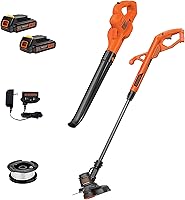
The BLACK+DECKER 20V MAX String Trimmer and Edger suits buyers who want cordless edging and trimming in one tool. Its 12 in cutting swath, 6,200 rpm speed and 5.7 lb weight fit routine grass and weed work near lawn borders.
The kit includes the LST300 trimmer-edger, 1 20V MAX lithium-ion battery, charger, AF-100 spool and guard. Its automatic feed spool adds line when needed without bumping the tool.
Which alternative fits your edging job?
Choose a 2-in-1 cordless tool for light, flexible edging, or a dedicated blade edger for deeper and more defined cuts. Your lawn shape and border material matter more than the tractor's engine size.
Choose the WORX 20V 12" 2-in-1 Cordless String Trimmer if you want a light tool with 2 included batteries, wheels and a tilting head. Its line-based cutting system is better suited to routine maintenance than trenching.
Choose the WORX Electric Lawn Edger if you need 3 depth settings and a 7.5 in blade for edging or trenching. Its corded design means you must manage an extension cord around the work area.
Choose the BLACK+DECKER 20V MAX String Trimmer and Edger if you want a 12 in cordless trimmer-edger with 1 battery, automatic line feed and adjustable handle and height positions.
For manual work around delicate borders, compare our best manual lawn edger guide. Our guide to how to use a manual lawn edger covers the slower but direct approach.
How do you check lawn tractor compatibility?
Start with the tractor manual and attachment catalog, then measure the mounting area before buying. Product names alone do not confirm compatibility.
Use this checklist:
- Record the tractor's exact model number.
- Check whether the manufacturer approves an edger or border-cutting attachment.
- Confirm the attachment's mounting bracket or hitch type.
- Measure the available width and ground clearance.
- Check whether the attachment needs tractor power, a separate motor or towing only.
- Confirm that the cutting area remains visible from the operator's seat.
- Check how the attachment lifts when crossing a driveway or curb.
- Make sure the tractor's mower deck, wheels and steering parts remain clear.
- Confirm that the attachment can be removed without altering the tractor.
- Follow the tractor and attachment manuals during setup and use.
If the manufacturer does not identify the attachment as compatible, treat the fit as unconfirmed. A homemade bracket may change the tractor's balance or place the cutting head where the operator cannot control it well.
Can a lawn tractor edge beside sidewalks and beds?
A lawn tractor can only edge safely when the approved attachment places the cutting tool correctly and preserves clearance. The tractor's turning radius and tire position can make tight borders difficult even when the attachment fits.
Straight runs beside a broad lawn may be easier than curved beds or narrow paths. Mark the intended line first, then confirm that the tractor can follow it without driving onto the curb or damaging plants.
Walk the line before you start if you can. Look for slopes, roots, low spots and places where the border narrows.
Check tire width in that narrow section. The attachment may fit on paper, yet the tractor may need to ride up a curb to reach the edge.
Curved beds add a different problem. The rear of the tractor can swing while the front follows a tight arc, and the cut can drift.
Plan a stop point at each corner. You should be able to lift or disengage the tool without rolling into the bed.
For a handheld tool, our guide to using a lawn edger explains line control and general edging technique. The same care with pace and sight lines helps on a tractor.
If you use a cordless mower and matching outdoor tools, our guide to how a cordless lawn mower works explains how battery systems differ from corded equipment. For combined trimming and edging, see the best trimmer edger combo options.
What is the final choice?
Pick an approved tractor attachment only when the tractor maker confirms the mount, clearance and power requirements. Otherwise, choose a walk-behind edger or a cordless 2-in-1 tool that matches the border work you need.
Start with the tractor manual, not with a product listing. Confirm the exact model, the approved implement list and the mount points in writing.
Measure the space around the wheels and deck before you order. Check ground clearance, working width and how the tool lifts for travel between runs.
Think about the border you have to cut. A short path edge, a long driveway line and a shallow trench each call for a different tool.
Pick the WORX 20V 12" 2-in-1 Cordless String Trimmer for light edging with wheels and 2 batteries. It suits routine border care where you also trim around posts and trees.
Its 12 in cutting diameter, 90 degree tilting head and rubberized wheels help you follow a line and then switch back to trimming. The 5.5 lb weight keeps it manageable on slopes and uneven patches.
Pick the WORX Electric Lawn Edger for dedicated blade edging and trenching. Its 7.5 in blade and 3 depth settings of 1 in, 1-1/4 in and 1-1/2 in suit a firmer, deeper cut.
That 14 lb corded tool needs an extension cord, so plan the route before you start. Keep the cord clear of the blade and behind you as you work.
Pick the BLACK+DECKER 20V MAX String Trimmer and Edger for cordless 2-in-1 work with automatic line feed. It suits buyers who want one 12 in tool for trimming and light edging.
Its automatic feed spool adds line when needed without bumping the tool. Adjustable handle and height positions help you set it for your reach and the border in front of you.
The best edger attachment for a lawn tractor is the one confirmed for your exact tractor. If no approved match exists, a separate edger gives you clearer control and avoids uncertain mounting changes.
Frequently asked questions
Can you attach an edger to any lawn tractor?
No. Lawn tractors use different frames, front attachments, mower decks and power systems, so an edger made for one tractor may not fit another.
Confirm the tractor model, approved attachments, mounting points, clearance and drive requirements before buying.
What is the best alternative to a lawn tractor edger attachment?
A dedicated walk-behind edger or a 2-in-1 cordless trimmer and edger is often the simpler alternative. It avoids uncertain tractor compatibility and gives you direct control along sidewalks, driveways and garden borders.
Can a string trimmer edge a lawn?
Yes, a string trimmer with an edging mode can handle light edge work when you guide it carefully. A wheeled edger gives a straighter path, while a dedicated blade edger is better suited to deeper or repeated cuts.