Can You Replace a String Trimmer Head with a Blade?
You can replace a string trimmer head with a blade only when the manufacturer approves that attachment for your exact model. The correct guard, mounting hardware, and operating instructions must all match.
On this page (9 sections)
- Can You Replace a String Trimmer Head with a Blade?
- What must match before you replace a string trimmer head with a blade?
- Why does the guard matter when using a blade?
- What mounting parts does a blade need?
- Can a line trimmer blade replace string trimmer line?
- When should you use a brush cutter instead?
- How should you check a blade conversion before cutting?
- What if you only need cleaner lawn edges?
- What is the safest answer for replacing a string trimmer head with a blade?
Can You Replace a String Trimmer Head with a Blade?
You can replace a string trimmer head with a blade only when the manufacturer approves the blade for your exact trimmer model. The change also requires the right guard, washer, nut, spacer, and mounting method.
A blade is not a universal upgrade for a line trimmer. The shaft, clutch, guard, rotation direction, and motor must all suit the cutting system.
What must match before you replace a string trimmer head with a blade?
The trimmer model, blade, guard, and mounting hardware must be approved as one system. Check the owner's manual and the attachment instructions before removing the line head.
Look for clear information about compatible blade types, maximum diameter, mounting washers, retaining nuts, spacers, and guard requirements. If the manual only describes line spools, assume a blade is not approved unless the manufacturer gives separate instructions.
The drive system matters because a blade creates different loads from flexible line. A trimmer that spins line safely may not have the shaft strength, clutch design, or balance needed for a rigid blade.
A model's power source does not prove compatibility. Corded electric, battery-powered, and gas tools can all have different limits.
Can you replace a string trimmer head with a blade on any model?
No, you cannot replace a string trimmer head with a blade on any model. A blade attachment needs more than a matching center hole.
Some tools are sold as 2-in-1 trimmers and edgers, but that does not mean they accept metal blades. The 2-in-1 function may refer only to changing between a line trimmer position and a wheeled edging position.
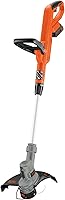
The BLACK+DECKER Weed Wacker with Auto Feed is a 14 in 2-in-1 corded electric string trimmer and lawn edger. Its described cutting system uses an automatic feed spool, and its included parts are an AF-100 spool, auxiliary handle, and guard.
Its 6.5-amp motor, POWERDRIVE Transmission, adjustable handle and height positions suit grass, weeds, and overgrowth within a line trimmer's intended use. The cord retention system helps prevent accidental cord disconnection during work.
Choose this type of tool when your main jobs are trimming lawn edges, reaching around flower beds, and cleaning up areas a mower cannot reach. If you need a rigid cutting system, check the manual for a dedicated brush cutter instead.
Why does the guard matter when using a blade?
The guard controls the cutting zone and helps contain debris, so the correct guard is part of the attachment system. Never treat the line guard as interchangeable with a blade guard.
Rigid blades can strike stones, edging, posts, and other hard objects. The guard must be the one approved for the blade and model, with the correct position and clearance.
Before work, inspect the guard for cracks, missing fasteners, and loose mounting points. Stop if the blade can touch the guard, shaft, or nearby parts while turned by hand with the power disconnected.
Wear the protective equipment required by the manual, keep people and pets away, and clear the work area of loose objects. Follow the tool's start-up and shutdown instructions every time.
The Best Brush Cutters guide can help you compare tools designed for heavier vegetation. A brush cutter may be a better match than modifying a light line trimmer.
What mounting parts does a blade need?
A safe blade installation needs the exact mounting parts specified for that model. These may include a blade, upper and lower washers, a retaining nut, a spacer, and a locking method.
The parts must center the blade and keep it tight while the shaft turns. A blade that fits the shaft but lacks the correct washers or nut is not a safe match.
Never use a random hardware-store washer or substitute a nut because the thread looks similar. The mounting parts must work with the shaft's thread, rotation, and locking design.
Disconnect the power source before touching the cutting head. For a battery tool, remove the battery.
For a corded tool, unplug it and prevent accidental reconnection.
Can a line trimmer blade replace string trimmer line?
A blade can replace string trimmer line only on a model approved for that blade. On other models, use the correct line size and spool system instead.
Line is flexible and can give when it contacts a border or plant. A rigid blade transfers more of that contact into the tool and can damage objects, the cutting head, or the operator's control.
If you are looking for a different cutting material, read What Can You Use Instead of String Trimmer Line? for options and limits. Do not assume that a thicker line, plastic blade, or universal head is approved for your trimmer.
The WORX 20V 12" 2-in-1 Cordless String Trimmer is described as a string trimmer and electric lawn edger with a push-button Command Feed spool. It includes 2 20V Power Share batteries, a charger, trimmer spool, safety guard, flower guard, and edger wheel.
Its head tilts 90 degrees for sloped terrain and hard-to-reach areas, while the spacer guard helps protect plants and lawn features. The tool weighs 5.5 lb and has a 7,600 rpm no-load speed.
The WORX system is useful when you want trimming and edging in one tool and already use, or plan to use, compatible WORX Power Share equipment. It does not make every blade attachment suitable.
For model-specific blade research, see Best Blades for RYOBI Weed Wackers. A blade that fits one RYOBI model may still be wrong for another model or for a different brand.
When should you use a brush cutter instead?
Use a dedicated brush cutter when your regular work includes thick weeds, woody stems, or dense brush and the tool is designed for that cutting system. This avoids forcing a light string trimmer into a job outside its intended use.
A brush cutter and string trimmer may look similar, but their cutting heads, guards, handles, and power systems can differ. Compare the tasks in Brush Cutter vs String Trimmer: Which Do You Need?.
A mini chainsaw is another separate tool for suitable pruning and wood-cutting tasks. The Seesii Mini Chainsaw is a 6 in battery-powered handheld chain saw with a 900-watt motor, 29 ft/s chain speed, and two 21V 2000 mAh batteries.
It weighs 1 kg and includes 2 batteries, 2 chains, a charger, gloves, a nut driver, and a screwdriver. The package does not include chain oil, so follow the tool's instructions for lubrication before cutting.
Do not use a chainsaw as a substitute for a trimmer. It has a chain, bar, and different operating controls, so it belongs to pruning and wood-cutting work rather than lawn edging.
How should you check a blade conversion before cutting?
Check the manual, guard, mounting parts, blade condition, and work area before starting. A correct fit still needs a careful pre-use inspection.
Use this order:
- Confirm that the exact model approves the blade.
- Install the specified guard and mounting hardware.
- Check that the blade is centered and securely tightened.
- Rotate the cutting system by hand with power disconnected.
- Inspect the blade for cracks, bends, dull sections, or missing parts.
- Clear stones, wire, toys, and other objects from the work area.
- Start in the approved position and stop if vibration or contact feels abnormal.
Do not sharpen, balance, or modify a blade unless the manual allows that maintenance. Replace damaged parts with the specified type.
Keep both hands on the tool where required, maintain stable footing, and avoid cutting above the approved height. Use extra care near fences, walls, tree trunks, irrigation parts, and decorative edging.
What if you only need cleaner lawn edges?
Use a trimmer's approved edging mode when your goal is a neat lawn border, not brush cutting. A wheel or guide can give you a more repeatable edge without changing the cutting system.
The BLACK+DECKER model rotates into a wheeled edger, while the WORX model uses rubberized wheels and an edger wheel for guided lines. These features address edging without requiring a rigid blade.
For help choosing between the two tools, read Edger vs String Trimmer: Which Tool Do You Need?. You can also compare Best String Trimmer Brands: Which Fits Your Yard? before choosing a replacement.
What is the safest answer for replacing a string trimmer head with a blade?
Replace a string trimmer head with a blade only when the exact model, blade, guard, and mounting parts are approved together. If any part of that match is unclear, keep the line head or use a dedicated brush cutter.
Pick an approved blade system for dense vegetation, an edging mode for lawn borders, and a separate pruning saw for branches and wood. The right tool depends on the cutting job, not just whether a blade physically fits.
Frequently asked questions
Can any string trimmer use a metal blade?
No. A string trimmer can use a metal blade only if the manufacturer approves that cutting system for the exact model.
The trimmer also needs the correct blade guard, mounting parts, shaft design, and instructions.
If the manual does not list a blade attachment, keep using the approved line head.
Do you need a different guard for a trimmer blade?
Usually, yes. A blade can throw heavier or larger debris than trimmer line, so the approved guard may be different from the line guard.
Install only the guard specified for your model, and never operate a blade without the required protection.
Is a brush cutter the same as a string trimmer?
No. A brush cutter is designed for heavier vegetation and may be built around a blade or other rigid cutting system.
A string trimmer is generally intended for grass and light weeds.
Some models accept multiple cutting systems, but compatibility must come from the manufacturer.
What should you do if a blade does not fit?
Do not file, drill, bend, or adapt the blade or mounting hardware. Use the approved line head, select a compatible attachment listed for the model, or choose a brush cutter designed for blade work.
An incorrect fit can cause looseness, imbalance, or loss of control.