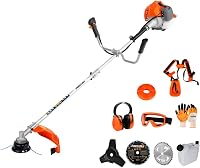
Brush Cutter vs String Trimmer: Which Do You Need? (November 2026)
Choose a string trimmer for lawn grass and soft weeds, but choose a brush cutter for thick brush, stalks and small saplings. The right choice depends on vegetation, cutting head, power source and compatibility.
On this page (9 sections)
- Brush cutter vs string trimmer: which one do you need?
- What is the difference between a brush cutter and a weed eater?
- Which tool handles thick weeds and brush?
- Which string trimmer is better for lawn edges?
- Does cutting width matter?
- Should you choose corded, cordless or an attachment?
- What should you use near flowers and hard surfaces?
- How do you use each tool safely?
- Brush cutter vs trimmer: which should you buy?
Choose a string trimmer for grass, lawn edges and soft weeds, but choose a brush cutter for thick brush, stalky growth and small saplings. That split helps you avoid using the wrong head for the job.
This brush cutter vs string trimmer comparison comes down to the cutting head and the vegetation in front of you. It also comes down to how you want to move, set up and store the tool between jobs.
A string trimmer uses flexible line to trim grass in places a mower cannot reach. That makes it a natural fit under benches, along fences and around posts where a mower body will not fit.
A brush cutter uses a rigid blade to clear growth that can overwhelm ordinary trimming line. A blade keeps cutting through stems that would wrap, stall or wear down line very quickly.
The terms can overlap in everyday talk and in some product names. Some tools accept different heads or attachments, but compatibility depends on the specific tool and its maker instructions.
That overlap is where buying mistakes start. A tool sold for lawn trimming may not be built to accept a brush blade, even if the shape looks similar in photos.
Compare the cutting system before you decide. Check what head the tool starts with and what heads or attachments it is approved to use.
Think about your normal yard first. If most of your work is grass and soft weeds, line is usually the simpler and lighter path.
If most of your work is thick brush and stalky growth, a blade system is the more honest fit. You will save time that you would otherwise lose to stalled line and repeat passes.
Also think about who will use the tool and how often. A person who trims weekly around beds needs easy line feeding and a guard that suits close work.
A person who clears an overgrown corner a few times a season needs a setup that suits a slower, more careful pace.
Power and storage matter too, but they come after the vegetation question. Start with plant height, stem thickness and density, then match the head, the power source and the added weight you are willing to carry.

 Best for cordless grass trimming
WORX 20V 12" 2-in-1 Cordless String Trimmer
Brush cutter vs string trimmer: which one do you need?
A string trimmer fits routine lawn care, while a brush cutter fits heavier clearing. Use the lightest tool that matches the plants you need to cut.
Choose a string trimmer for lawn edges, sidewalks, flower beds, fence lines and grass around obstacles. Flexible line is useful where you need to trim close to landscape features without using a rigid blade.
Choose a brush cutter for overgrown brush, thick stalky vegetation and other growth that needs a blade. The EGO BCA1220 is designed for brush clearing and saplings up to 1 inch thick when used with the compatible EGO power head.
The best tool also depends on your access to power. A corded model needs a suitable outdoor connection and enough cord reach.
A cordless model needs charged batteries. An attachment needs the correct power head before it can work.
What is the difference between a brush cutter and a weed eater?
A weed eater and a string trimmer are usually the same type of tool, while a brush cutter is a heavier cutting option. The difference is mainly in the head, the job it is made for and how much care it needs.
The phrase “weed eater” commonly refers to a line trimmer used for grass and weeds. It is an everyday name for the same basic tool that most makers call a string trimmer.
The string trimmer weed eater guide explains the shared terms and the main buying choices. It can help if your work is mostly lawn trimming and edging around the home.
Those two names do not signal a change in cutting power by themselves. What matters is the line head, the guard and whether the tool is set up for trimming or for edging.
String trimmers are a better match for softer vegetation. They handle lawn grass, clover, light weeds and growth along hard edges with flexible line.
They can also be easier to guide around borders because the line head is intended for trimming rather than cutting with a steel blade. That makes them a calmer choice near beds, paths and low plantings.
A brush cutter is built for a different class of plant. It uses a blade to deal with thicker growth that line would struggle to cut cleanly.
A blade can cut more demanding vegetation, including thick stalks and woody stems within its stated limits. The trade-off is that it needs a more controlled grip and a clearer work area.
Brush cutters also ask more of the person using them. The extra weight, vibration and cutting force mean slower passes and more attention to footing.
They require more attention to safe handling, clearing distance and the manufacturer's instructions. Guards, protective gear and a checked attachment fit are part of normal use, not optional extras.
A string trimmer asks for care too, but the work is usually lighter. You still need to check the guard, keep the line away from people and pets and avoid throwing stones hidden in grass.
The set-up differs as well. A line trimmer may need a fresh spool or a simple line feed check before you start.
A brush cutter set-up needs a check that the blade and attachment match the power head exactly.
Care after the job follows the same split. Line heads need a clean guard and a check for worn line.
Blade systems need a clean, dry store and a visual check for damage before the next use.
For daily lawn care, the line tool is usually the easier fit. For clearing work, the blade tool earns its place.
Choosing by head, vegetation and set-up will show you which tool belongs in your shed.
Which tool handles thick weeds and brush?
A brush cutter handles thick brush better because its rigid blade is made for heavier vegetation. A string trimmer is the better choice when the plants are mainly grass and soft weeds.
The EGO Power+ BCA1220 has a 3-tooth steel blade and a 12-inch cutting width. Its stated uses include overgrown brush, thick stalky vegetation and saplings up to 1 inch thick.
The Milwaukee Electric attachment has a 9-inch cutting width and a listed speed of 6200 rpm. Its product name identifies it as a Quik-LOK brush cutter attachment, so confirm that your power system accepts the exact attachment before buying.
A blade does not turn every trimmer into a brush cutter. The shaft, attachment connection, power head and instructions must all support that setup.
If you need more detail on blade choices, see our guide to the best brush cutting blade for weed eater. For a compatible Husqvarna setup, our best Husqvarna weed eater blade guide covers that narrower choice.
Which string trimmer is better for lawn edges?
The BLACK+DECKER is the stronger fit for corded edging, while the WORX suits cordless trimming and edging. Both are 2-in-1 tools that convert between a string trimmer and an edger.
The BLACK+DECKER Weed Wacker with Auto Feed has a 14-inch cut path, a 6.5-amp motor and an edging wheel. Its automatic feed spool helps provide line without bumping, while the cord retention system helps prevent accidental cord disconnection.
It weighs 6.3 pounds and has an adjustable handle and height positions. The 2-in-1 design suits lawn borders, sidewalks and flower beds when you have access to a suitable outdoor power connection.
The WORX 20V 12" 2-in-1 Cordless String Trimmer has a 12-inch cutting diameter, a 7600 rpm no-load speed and a 5.5-pound machine weight. Its head tilts 90 degrees, and rubberized wheels help guide the edger.
It includes 2 20V Power Share batteries, a charger, a trimmer spool, support wheels and a safety guard. The batteries work with the WORX Power Share family, including WORX 20V and 40V tools.
The WORX also has a command-feed spool, an adjustable spacer guard and a 0.065-inch line diameter. Those details make it a useful fit for routine lawn work where cord-free movement matters.
For a combined outdoor-tool purchase, compare the best cordless string trimmer and blower combo. If your current head is worn, see the best replacement string trimmer heads before replacing the whole tool.
Does cutting width matter?
A wider cutting path can cover more grass per pass, but a smaller path may be easier around tight borders. Width is a useful clue, but it is not the whole story for any tool.
Choose width based on the open area and the precision work you do most often. Wide open lawn favours a wider path, while beds and posts favour a narrower one.
The BLACK+DECKER has a 14-inch cut path. The WORX has a 12-inch cutting diameter.
The EGO brush cutter attachment also has a 12-inch cutting width, while the Milwaukee attachment has a 9-inch cutting width.
A wide string-trimmer path can reduce passes across open lawn. You cover more ground with each sweep, which suits long fence lines and large borders.
It may be less convenient around narrow beds, posts and fragile plants if you have less room to guide the head. A small swing can mark bark or a stone edge when space is tight.
A narrower brush-cutter path can suit targeted clearing. It helps you work in overgrown corners where a wide swing would hit stems you do not want to cut yet.
It does not mean the tool is intended for light lawn edging, since the blade type and attachment design matter as much as width. A 12-inch blade and a 12-inch line head behave very differently in use.
Weight also changes how width feels in your hands. A wide head on a light trimmer is easy to move, while a wide blade on a heavier set-up needs a slower pace.
Think about guard size and safe swing space too. The listed width only helps if you have room to use it without dragging the guard through plants.
Pick the width that matches your typical yard, not your biggest one-off job. Most weeks will be spent in the tight, detailed places.
Should you choose corded, cordless or an attachment?
Choose corded power for predictable lawn work near an outlet, cordless power for movement, and an attachment when you already own the matching power head. Each choice changes setup and storage.
The BLACK+DECKER is corded electric. Plan the route before trimming, keep the cord away from the cutting head and use the cord retention system as intended.
The WORX is battery powered and includes 2 lithium-ion batteries. Charge and store the batteries according to the instructions, and keep the work area clear before starting.
The EGO BCA1220 is an attachment for the EGO POWER+ Multi-Head System. It is exclusively compatible with the PH1420 power head, which is available separately.
The attachment has a carbon fiber shaft and a listed lifetime warranty.
The Milwaukee Electric Quik-LOK. Brush Cutter Attachment has a listed 6.5-pound weight and a 9-inch cutting width.
Its product data identifies its power source as hydraulic powered, so check the intended Milwaukee system and connection before ordering.
What should you use near flowers and hard surfaces?
Use a string trimmer with a guard or edging guide for flower beds and hard borders, and keep a brush cutter away from people, glass, vehicles and delicate plants. The cutting system changes the risk around obstacles.
The BLACK+DECKER includes a wheeled edge guide and a guard. The WORX includes a safety guard, flower guard and adjustable spacer guard.
The WORX spacer guard helps keep the line away from plants and landscape features. Its rubberized wheels also support straighter edging lines.
A brush cutter blade needs more space around the work area. Remove loose objects first, keep bystanders away and follow the manual for the required protective equipment and operating position.
If your main need is line work, learn about a string trimmer line alternative before switching to a blade. A different line material does not automatically make a string trimmer suitable for thick brush.
How do you use each tool safely?
Inspect the tool, clear the area and use the cutting head for its intended vegetation. Never force a string trimmer into growth that calls for a brush cutter.
Before trimming, check the guard, line or blade, shaft and power connection. Make sure the work area is free of stones, wire, toys and other objects that could be thrown.
For a brush cutter, keep the blade away from people, pets, windows and vehicles. Use controlled passes and stop if the vegetation is too thick for the tool or if the attachment does not match the power head.
Our guide on how to use a brush cutter covers setup, movement and clearing habits in more detail. Read the manual for the exact tool before changing a head or attachment.
After work, disconnect the cord or remove the battery before inspection and cleaning. For attachments, separate the parts only as the manufacturer directs.
Brush cutter vs trimmer: which should you buy?
Buy a string trimmer if you mainly cut grass, soft weeds and lawn edges. Buy a brush cutter if your property has thick brush, stalky growth or saplings that need a rigid blade.
Choose the BLACK+DECKER Weed Wacker with Auto Feed for corded lawn trimming and edging with a 14-inch cut path. Choose the WORX 20V 12" 2-in-1 Cordless String Trimmer when cordless movement, 2 included batteries and a 12-inch cutting diameter matter more.
Choose the EGO Power+ BCA1220 12” Brush Cutter Attachment if you already use the compatible EGO POWER+ Multi-Head System and need a 3-tooth steel blade for heavy vegetation. Choose the Milwaukee Electric attachment only after confirming the matching Quik-LOK system and intended power setup.
A brush cutter vs string trimmer decision is easier when you name the vegetation first. Grass points to line.
Thick brush points to a compatible blade.
Frequently asked questions
What is the main difference between a brush cutter and a string trimmer?
A string trimmer uses flexible line to cut grass and soft weeds, while a brush cutter uses a rigid blade for thicker vegetation. String trimmers are easier to use around lawn edges and garden borders.
Brush cutters suit overgrown brush, thick stalks and, with the EGO attachment, saplings up to 1 inch thick.
Can a string trimmer cut brush?
A string trimmer can handle grass, weeds and some light overgrowth, but flexible line is not the same as a brush-cutting blade. For thick stalky vegetation, use a tool designed for brush clearing.
The EGO BCA1220 uses a 3-tooth steel blade with a 12-inch cutting width.
Is a brush cutter better than a weed eater?
A brush cutter is better for thick brush and woody growth, while a weed eater, also called a string trimmer, is better for lawn grass, borders and soft weeds. Choose by vegetation rather than by the general label.
A string trimmer is usually the simpler fit for routine lawn maintenance.
Can you put a brush cutter blade on any string trimmer?
No. Blade compatibility depends on the tool, attachment system and manufacturer instructions.
The EGO BCA1220 is exclusively compatible with the EGO POWER+ Multi-Head System Power Head PH1420.
Check the exact model before changing from line to a blade.
Which is easier to use, a brush cutter or a string trimmer?
A string trimmer is usually easier for light lawn work because it uses flexible line and is designed for trimming or edging. A brush cutter is suited to heavier vegetation and needs more careful control around obstacles.
Follow the manual, wear the required protective equipment and keep people clear.