Mini Chainsaw Drill Attachments: What to Look For
A mini chainsaw drill attachment should have secure mounting, effective guarding and a cutting setup that matches your drill. Check the attachment's fit, chain adjustment and safe handling before cutting.
On this page (8 sections)
- Mini Chainsaw Drill Attachments: What to Look For
- What should you check before buying a mini chainsaw drill attachment?
- How important are guarding and chain protection?
- What type of cutting suits a drill attachment?
- Which complete mini chainsaws are alternatives?
- How do you set up and use a mini chainsaw drill attachment?
- What maintenance does a drill attachment need?
- Is a mini chainsaw drill attachment right for you?
Mini Chainsaw Drill Attachments: What to Look For
A mini chainsaw drill attachment should have secure mounting, effective guarding and a cutting setup that matches your drill. Check the attachment's fit, chain adjustment and safe handling before cutting.
It can seem like a simple way to add cutting power to a tool you already own. That idea only works when the whole setup is designed for the job.
The drill is not just a handle with a battery in it. It supplies the speed and torque that drive the chain through wood.
The attachment must connect in a way that keeps the bar aligned with the drill. Any wobble or slip will make the cut harder to control.
The chain also needs guarding where it passes close to your hands. A small bar brings the chain nearer to the operator than a larger saw often does.
Chain adjustment matters for the same reason. A chain that is too loose can jump or cut unevenly, while a chain that is too tight can strain the drive.
Before you buy, read the attachment instructions and your drill manual together. Look for clear limits on drill type, speed and connection.
Think about who the setup suits in daily use. It may suit someone who already owns a suitable drill and only needs occasional light cutting.
It is less likely to suit a first time user who wants a ready to use saw. A dedicated cordless mini chainsaw keeps the motor, battery and controls in one matched design.
Consider setup time as well as cutting time. Fitting, checking tension and confirming direction all happen before the first cut begins.
If any of those steps feel unclear, pause and get the answer from the maker. Guessing with a moving chain is not a safe shortcut.
If you are still comparing saw types, our guide to what's the best chainsaw explains how bar length, power source and intended work affect the choice.
Use that broader comparison to decide whether a drill attachment fits your yard work. Light pruning and heavy cutting point to different tools.
What should you check before buying a mini chainsaw drill attachment?
Check mounting, compatibility, guarding and chain adjustment first. A low price or compact shape does not make an attachment suitable for your drill or your cutting work.
Look for clear information about the connection point. The attachment should explain how it locks onto the drill, what chuck or drive connection it needs and whether the drill must have a specific speed or torque range.
The connection should resist twisting while the chain is moving. If the attachment can shift, wobble or pull out of alignment, stop and do not use it.
Also check how the chain is tensioned. A useful design should let you inspect and adjust the chain without guessing.
A loose chain can cut poorly or come off, while an overtightened chain can add strain to the drive system.
Does the drill provide enough power?
The drill needs enough speed and torque for the attachment's cutting system. Battery voltage alone does not tell you whether the combination will work.
A drill may have a powerful motor but still be a poor match if its chuck, drive connection or control system does not suit the attachment. Check the attachment instructions and the drill manual together.
Avoid treating a drill's maximum speed as a guaranteed cutting speed. Cutting wood places changing resistance on the chain, so the result depends on the complete setup, not one number printed on the tool.
How important are guarding and chain protection?
Guarding is essential because the chain remains exposed to wood, chips, hands and nearby objects while it cuts. Choose a setup that helps control debris and limits contact with the moving chain.
Look for a chain guard, hand protection and a design that keeps your grip away from the guide bar. The guard should cover the parts of the chain you are most likely to reach during the cut.
Guarding does not remove the need for safe handling, but missing or weak protection should be a reason to reject an attachment. A low price does not fix a poor guard.
Wear eye protection and sturdy footwear before you start. Chips can travel faster and farther than many people expect.
Keep bystanders away from the cutting area and clear the ground of loose items. Children and pets should stay well back until the chain has stopped.
Remove loose clothing and tie back long hair before starting. Gloves can help with grip, but they do not make direct contact with a moving chain safe.
Do not bypass a safety feature to make the attachment fit. If a cover must be removed, confirm that the design is meant to operate that way before using it.
Check the guard after every adjustment and after any contact with hard wood or soil. A cracked or shifted guard can change how debris is thrown.
For a separate look at safe handling, read how to use a Saker mini chainsaw. The same basic habits apply: control the tool, plan the cut and keep the chain away from your body.
Work at a pace that lets you stop quickly if the wood moves. Guarding helps, but your stance and attention do most of the work.
What type of cutting suits a drill attachment?
A mini chainsaw drill attachment is best considered for light, controlled cutting, not large logs, heavy storm cleanup or work that needs long continuous operation.
Think of it as a tool for small, planned cuts. Short branches, light pruning pieces and compact wood work fit that idea better than big yard jobs.
Before cutting, identify the wood size and position. Measure the branch against the bar length so you are not asking for more than the setup can handle.
A branch under tension can move when cut, and a supported piece can pinch the chain. Look for bend, weight and trapped pressure before you start.
Clear the area so the cut material has somewhere safe to fall. A falling branch can pull the chain or knock you off balance.
Use a stable stance and let the chain do the work. Plant your feet, keep your arms close to your body and avoid reaching across the bar.
Forcing the attachment into the wood can increase binding and make the drill harder to control. If the cut slows, stop and check the chain, tension and wood position.
A small attachment may suit occasional pruning or compact wood pieces if the manufacturer approves that use. Check the maker limits first, rather than assuming any branch is fine.
It is a poor match for firewood rounds, large limbs or storm debris. Those jobs need more bar length, more power and a saw built for repeated heavy cuts.
Long continuous work also suits a dedicated saw better. A drill attachment can heat up, tire the drill battery and leave you stopping to check the setup.
Our guide to the best cordless mini chainsaw covers compact saws designed as complete tools.
Compare the two options by the work you actually do most often. Occasional light cuts and regular yard work point to different choices.
Keep a clear plan for each cut before you switch the drill on. If the piece cannot be supported safely, move it or choose a different tool.
Which complete mini chainsaws are alternatives?
A complete cordless mini chainsaw can be easier to evaluate because the motor, battery, chain, guide bar and safety controls are designed together. These examples show different sizes and power setups for readers who decide a dedicated saw makes more sense than a drill attachment.
Seesii Mini Chainsaw
The Seesii Mini Chainsaw suits someone who wants a compact 6 in battery-powered saw with a 900 W motor and two 21 V 2000 mAh batteries. It weighs 2.7 lb and includes two chains, a charger, a nut driver, a screwdriver and gloves.
Oil is not included.
Its listed chain speed is 29 ft/s, and the product information describes a double safety lock, chain guard and low-recoil design. The title also identifies tree trimming and wood cutting as intended uses.
The two-battery setup may help when one battery needs charging while the other is ready. Its compact weight can suit pruning tasks where carrying a larger saw would be unnecessary.
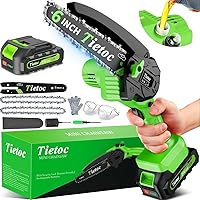
Tietoc Chainsaw 6 Inch Mini Electric Chainsaw
The Tietoc Chainsaw 6 Inch Mini Electric Chainsaw suits buyers who want an 880 W cordless saw with a removable 2000 mAh battery. It weighs 3.3 lb and includes two chains, a guide plate, a charger, a screwdriver and a guide plate sheath.
Lubricating oil is not included.
Its product information describes a 28.6 ft/s chain speed, an auto oiler system, a security lock and safety baffles. The anti-slip texture handle is intended to support grip while cutting.
The auto oiler adds a maintenance step because the oil tank needs filling. Follow the charging instructions, use the provided charger and disconnect it when charging is complete.
Greenworks 40V 12 in Cordless Electric Chainsaw
The Greenworks 40V 12 in Cordless Electric Chainsaw suits work that needs a longer 12 in chain and a larger saw format. It includes a 2.0 Ah battery and charger, weighs 10.9 lb and uses a 40 V battery platform.
The product information describes a low-recoil chain, dual safety start, tool-free auto-tensioning and an auto-oiler. Greenworks also identifies the 40 V platform as compatible with its 40 V outdoor tools.
This saw is a different class from a small drill attachment or 6 in mini saw. Its 12 in chain may better suit storm cleanup, limbing and pruning where the compact options are too limited, but its 10.9 lb weight needs more carrying and handling effort.
How do you set up and use a mini chainsaw drill attachment?
Set up the attachment with the drill disconnected from power first. Read the instructions, inspect the chain and guard, then secure the attachment before inserting a battery or connecting the drill.
Check these points before the first cut:
- Confirm that the attachment matches the drill's connection and operating requirements.
- Inspect the guide bar, chain, fasteners and guard for damage.
- Adjust chain tension according to the attachment instructions.
- Confirm that the chain moves in the intended direction.
- Make sure the drill control can stop the chain quickly.
- Charge the drill battery and keep the work area dry.
- Wear eye protection and suitable work clothing.
- Start with a small, stable piece of wood approved for the attachment.
Never test the chain by touching it or holding the attachment near your body. Keep the drill switched off while making adjustments, clearing debris or checking the chain.
Chain direction matters on any small saw. Review which direction a mini chainsaw chain goes before fitting or replacing a chain.
What maintenance does a drill attachment need?
A drill attachment needs regular inspection, chain care and cleaning after use. A moving chain creates heat and friction, so follow the attachment's lubrication instructions rather than running it dry.
Start by disconnecting the drill from power before you touch the chain or bar. That one step removes the risk of an accidental start while you clean.
After disconnecting the drill, brush away chips and inspect the chain. Look for dull cutters, bent parts, loose rivets or damage from hitting soil or stones.
Check that the fasteners remain tight and that the guard has not cracked or shifted. A small crack can grow quickly once the chain is moving again.
Clean the bar groove and drive area so chips do not build up. Packed debris can affect chain movement and make the next cut harder to control.
Follow the maker guidance on lubrication. Too little oil can add friction, while excess oil can collect dirt and make cleanup harder.
Inspect chain tension again after cleaning and after the first few cuts. New or heavily used chains can change as they warm and wear.
Store the attachment with its chain protected. A bar cover or a safe place in a toolbox keeps the chain from being bumped or dulled.
Keep batteries, drills and cutting tools dry, and do not charge batteries in wet or high-temperature conditions. Dry storage also helps fasteners and metal parts resist rust.
Label or separate the attachment from other drill accessories. That makes it easier to find the right instructions and parts when you need them.
A complete cordless saw may simplify maintenance because its chain, bar and motor are matched. You still need to clean, check tension and store the chain safely.
For an 8 in option, compare our guide to the best mini chainsaw cordless 8 inch models.
Keep a simple record of when you cleaned and adjusted the chain. That habit makes wear easier to spot before it affects the next job.
Is a mini chainsaw drill attachment right for you?
A mini chainsaw drill attachment makes sense only when the attachment and drill are clearly compatible and the cutting work is light. Choose a complete cordless mini chainsaw if you want built-in safety controls, a matched motor and a simpler setup.
Start with the work you plan to do most often. Small pruning cuts and compact wood pieces suit a drill setup better than large branches or storm cleanup.
Check that you already own a suitable drill for the attachment. The maker should state the required connection, speed and torque in plain terms.
Make sure you can secure the attachment without wobble. If it shifts under load, the cut will be hard to guide and hard to stop.
Confirm the chain guard and adjustment system before you buy. You should be able to inspect the chain, set tension and keep your hands clear.
Pick a drill attachment when you already have a suitable drill, understand the mounting requirements and can verify the chain guard and adjustment system. It can be a practical choice for occasional use.
Pick the Seesii for a 6 in saw with two batteries, the Tietoc for a 6 in saw with auto lubrication, or the Greenworks for a heavier 12 in cordless format. Those are complete saws, not drill attachments.
The Seesii option suits repeated light cutting where a spare battery helps. The Tietoc option adds an auto oiler step that needs filling and checking.
The Greenworks option suits larger cutting work that a 6 in mini saw cannot handle. Its 12 in chain and heavier body need more handling effort in return.
Weigh setup time against cutting time. A dedicated saw usually takes less time to prepare and check before work.
Weigh cost in the same way. A drill attachment may cost less up front, but only if your drill is already suitable.
The safest choice is the one you can control throughout the cut. If the connection, guard, power requirement or chain direction is unclear, do not use the attachment until those points are confirmed.
Frequently asked questions
What is a mini chainsaw drill attachment?
A mini chainsaw drill attachment is a cutting accessory designed to connect to a compatible drill or drill-style power tool. It uses a small guide bar and chain, so you must confirm the mounting method, drill compatibility, chain protection and operating instructions before use.
Are mini chainsaw drill attachments safe?
They can still expose you to a moving chain, kickback, thrown debris and accidental startup. Use only a secure attachment with suitable guarding, keep both hands and loose clothing away from the chain, wear eye protection and follow the attachment and drill instructions.
Can a cordless drill power a mini chainsaw attachment?
Only if the attachment is designed for that drill and the drill supplies the required speed, torque and connection. A cordless drill's battery capacity does not by itself prove compatibility, so check the attachment's specifications and the drill maker's instructions first.
Is a drill attachment better than a cordless mini chainsaw?
A drill attachment may appeal if you already own a compatible drill, but a cordless mini chainsaw is usually simpler because its motor, battery, chain and guard are designed as one system. Compare the setup time, handling, safety controls and cutting needs before choosing.