How to Sharpen Lawn Mower Blades
To sharpen lawn mower blades, disconnect the mower’s power, remove the blade, sharpen its existing bevel evenly, and check its balance before reinstalling it. Replace a blade with deep damage or missing metal.
On this page (9 sections)
- How do you sharpen lawn mower blades safely?
- Can you sharpen a lawn mower blade on the mower?
- How do you remove and inspect the blade?
- What tools help sharpen a lawn mower blade?
- How do you sharpen the blade without changing its shape?
- How do you check blade balance after sharpening?
- How do you reinstall a sharpened mower blade?
- What should you do if the mower still cuts poorly?
- Which sharpening method should you choose?
To sharpen lawn mower blades, disconnect the mower’s power, remove the blade, sharpen its existing bevel evenly, and check its balance before reinstalling it. Replace a blade with deep damage or missing metal.
A clean, even edge helps the blade cut grass instead of tearing it. Work carefully, follow the mower manual, and stop if you find cracks, a bend, or damage you can't remove without taking off too much metal.
How do you sharpen lawn mower blades safely?
Disable the mower, remove the blade, and secure it before sharpening. The steps differ by mower type, so check its manual for the correct way to isolate power and remove the blade.
For a cordless mower, remove the battery and safety key if the mower has one. A closer look at how a cordless lawn mower works can help explain why removing the battery matters before maintenance.
For a gas mower, disconnect the spark plug lead and follow the manual's instructions before tipping or servicing it. Wear gloves and eye protection, and keep hands clear of the blade edge.
- Stop the mower on a flat surface and let it cool.
- Disconnect power using the procedure in the manual.
- Prevent the blade from turning, then loosen and remove it.
- Note which side faces down and how the blade sits on the spindle.
- Clamp the blade securely before sharpening.
Mark the underside of the blade before removal if its orientation isn't obvious. Keep the bolt and any washers together, and don't rely on memory when reinstalling them.
Can you sharpen a lawn mower blade on the mower?
You can touch up some standard residential blades while they remain installed, but removing the blade allows a better inspection and balance check. Only use an on-mower method if the mower and sharpener instructions allow it.
The mower must be fully disabled first. Remove the battery or safety key on a cordless model, and prevent the blade from moving.
Never work near a blade that can start or turn unexpectedly.
On-mower sharpening doesn't let you inspect the full blade as easily. Remove it if you see a chip, dent, crack, bend, or uneven wear, or if you need to check its balance.
The Sharp Pebble sharpener is designed for standard residential mower blades, and its maker says blade removal is optional for many such blades. It also says badly worn edges are best sharpened with the blade removed.
Its maker describes it as a sharpener for maintaining dull edges, not a grinder for deep dents, chips, or missing metal. Follow the included instructions and your mower manual before using it.
How do you remove and inspect the blade?
Secure the blade, loosen its fastener, and inspect both ends and the center before sharpening. Use the wrench size and removal method in the mower manual.
Some mowers have a blade brake or other parts around the blade assembly. Learn what a mower’s blade brake does before working near a brake mechanism, and don't take it apart unless the manual directs you to.
Clean grass and dirt from the blade so you can see its condition. Look for cracks, bent sections, deep gouges, and worn edges.
Replace a blade if it is cracked, bent, or missing metal. Sharpening can't restore the blade's original shape, and grinding away too much material can weaken it.
The deck material affects cleanup and corrosion care after the blade is back in place. See how steel and composite mower decks differ in maintenance for deck-specific upkeep.
What tools help sharpen a lawn mower blade?
Choose a sharpening tool that suits the blade and the amount of metal that needs to come off. A hand sharpener can suit light maintenance, while severe damage calls for professional assessment or blade replacement.
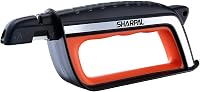
The SHARPAL 103N has several sharpening parts, including preset-angle slots, a tungsten carbide bar, and a ceramic bar. Its maker describes it for single- and double-beveled blades and other garden tools.
Keep the tool aligned with the blade's existing bevel and use controlled strokes. Skip it if you need to remove a large amount of metal or repair a damaged blade.
Smith’s 50603 uses a preset carbide blade and has an oversized handle and finger guard. It also includes a wire cleaning brush that stores in the handle.
This tool is suited to a basic sharpening task, not repairing a cracked or bent blade. Use it only on a blade that is sound and securely held.
How do you sharpen the blade without changing its shape?
Follow the original bevel with smooth, even strokes and remove as little metal as you can. The goal is to restore a consistent cutting edge, not make the blade razor sharp.
Clamp the blade so it can't shift. Move the sharpener along the bevel from the inside of the cutting edge toward the tip, using the same angle and similar pressure throughout.
Sharpen the other end with the same number of strokes when practical. Check both edges often so one side doesn't end up noticeably thinner or sharper than the other.
A burr may form along the opposite side of the edge. Remove it with a few light strokes, following the tool's instructions.
Stop if the edge needs heavy grinding or the blade has deep damage. The Sharp Pebble is intended to maintain dull edges, and its maker says damaged blades with chips or missing metal need a grinder first.
For more options by sharpening method, see our guide to the best cordless lawn mower blade sharpener. Match any tool to your mower blade and follow both manuals.
How do you check blade balance after sharpening?
Check balance before reinstalling the blade because uneven sharpening can cause vibration. Use a blade balancer if you have one, or follow the mower manual's approved balance-check method.
A properly balanced blade stays level when supported at its center. If one end drops, remove a small amount of metal from the heavier end, then check again.
Don't keep removing metal if the blade won't balance or if its edge becomes uneven. Replace it or ask a mower repair shop to assess it.
How do you reinstall a sharpened mower blade?
Reinstall the blade in its original orientation and tighten the fastener to the manual's instructions. Check that washers and other parts are in their original positions.
Confirm the cutting edge faces the correct direction. A blade installed upside down may not cut properly, even if it is sharp.
Make sure the blade turns freely by hand only if the manual says this is safe and power remains disconnected. Reconnect the battery, key, or spark plug lead only after tools are clear and the mower is fully assembled.
For general operating steps, see how to use an electric mower.
If the mower won't start after maintenance, check the power source and safety interlocks before troubleshooting other parts. Our guide to EGO lawn mower fuse replacement covers one model-specific issue.
What should you do if the mower still cuts poorly?
Inspect the blade, deck, and mowing conditions if a sharp blade still leaves a ragged cut. A dull edge is only one possible cause.
Check that the blade is installed correctly and balanced, then look for grass buildup under the deck. Wet or tall grass can also leave an uneven finish, so mow when conditions and grass height suit the mower.
For lawns with slopes or uneven ground, mower control and traction can affect cut quality. Read when an all-wheel drive mower may be useful if you're comparing mower types.
Protecting equipment between uses can also reduce corrosion and debris buildup. A zero-turn mower cover may help protect a stored mower, if that mower type matches your setup.
Which sharpening method should you choose?
Choose a hand sharpener for a sound blade that needs a light touch-up, and remove the blade when you need to inspect it or check balance. Use a power sharpener only when its instructions match your blade and you can keep the original bevel even.
Replace a blade with cracks, bends, deep dents, or missing metal. For a routine touch-up, choose among the SHARPAL multi-sharpener, Sharp Pebble cordless tool, and Smith’s preset-carbide sharpener based on the control and method you prefer.
Frequently asked questions
How often should you sharpen lawn mower blades?
Sharpen blades when the cut looks ragged, grass tips turn brown, or the blade has visible dull spots. How often that happens depends on mowing conditions, blade contact with soil or debris, and use.
Inspect the edge during routine maintenance and follow the mower manual's schedule.
Can you sharpen a lawn mower blade without removing it?
Some standard residential blades can be touched up while installed, but the mower must be fully disabled and secured first. Removing the blade makes it easier to inspect for cracks, chips, and bends, and to check balance.
Follow the mower and sharpener instructions before choosing an on-mower method.
What angle should a lawn mower blade be sharpened at?
Keep the blade's existing bevel angle rather than choosing a new one by eye. Mower blades differ, so check the mower manual or compare the edge before sharpening.
Use steady strokes and remove only enough metal to restore the cutting edge.
Should a lawn mower blade be razor sharp?
No. A mower blade needs a clean, even cutting edge, not a knife-like razor edge.
An overly sharp edge can wear faster, while an uneven edge can cause vibration.
Keep the original bevel and check the blade's balance after sharpening.