How to Cut Wood with a Chainsaw
To cut wood with a chainsaw, secure the timber, plan the cut, hold the saw with both hands, and let the chain do the work. Use the right cut for supported logs, keep the bar clear, and stop when the wood shifts or the saw binds.
On this page (10 sections)
- What should you do before cutting wood with a chainsaw?
- How do you hold and start a chainsaw?
- How do you cut a log supported at both ends?
- How do you cut a log supported at one end?
- How deep should each cut be?
- How do you choose a chainsaw for cutting wood?
- What should you do if the chain becomes dull?
- How do you prevent kickback while cutting?
- What should you do after cutting the wood?
- What is the best way to cut wood with a chainsaw?
To cut wood with a chainsaw, secure the timber, plan the cut, hold the saw with both hands, and let the chain do the work. Use the correct approach for a supported log, keep the guide bar clear, and stop if the wood shifts, pinches the bar, or causes the saw to kick back.
This guide covers basic cutting preparation and technique for logs and timber that are already supported. It doesn't replace professional training for felling trees, cutting overhead limbs, or handling wood under heavy tension.
What should you do before cutting wood with a chainsaw?
Prepare the wood, saw, work area, and protective equipment before starting the chain. A few minutes of setup can prevent the most common problems, including movement, binding, poor footing, and accidental contact with the chain.
Clear branches, tools, rocks, and loose pieces from around the log. Make sure you have a stable stance and a clear path to step away if the timber rolls or separates.
Inspect the chain, guide bar, chain brake, and controls with the saw switched off. Check chain tension according to the saw's instructions, and make sure the chain is lubricated before cutting.
Wear eye and hearing protection, gloves, sturdy footwear, and clothing suited to chainsaw work. Chainsaw chaps can add a protective layer around your legs, so our guide explains whether you can use chainsaw chaps with a battery chainsaw.
The U.S. Occupational Safety and Health Administration's chainsaw safety guidance covers work practices and protective equipment for chainsaw operations.
How do you hold and start a chainsaw?
Hold the front handle with your left hand and the rear handle with your right hand, then keep both hands on the saw while cutting. Stand with your feet apart and keep the saw close enough to control without leaning over the wood.
Start the saw on stable ground or with the rear handle secured between your legs if the manufacturer's instructions allow that method. Engage the chain brake when moving, repositioning, or walking with the saw.
Keep your thumb wrapped around the front handle. Don't cut one-handed, reach across the bar, or use the tip for casual contact with the wood.
Your upper body should stay to the side of the guide bar rather than directly behind it. This position gives you better control if the chain catches and the saw moves toward you.
How do you cut a log supported at both ends?
For a log supported at both ends, begin the cut from the top and finish from below if the log is thick enough to pinch the bar. The upper part of the log tends to compress as the cut opens below, so a single deep top cut can trap the chain.
Place the saw's lower bumper or lower bar section against the wood without forcing it. Start with a controlled top cut, then stop before the bar reaches the area where the wood may close around it.
Move to a safe position and complete the cut from the underside. Keep your hands and body away from the opening as the log separates.
For a small piece that the bar can pass through without binding, one controlled cut may be enough. Never hold the timber with your foot or ask another person to steady it by hand.
How do you cut a log supported at one end?
For a log supported at one end, make the first cut from the underside and finish from the top when the wood is likely to bend downward. The underside can open as the top closes, so cutting only from above may pinch the bar.
Support the free end so it cannot drop onto the bar or roll into your legs. Keep your feet clear of the expected movement and stand where the log cannot swing toward you.
Make a shallow underside cut first, then complete the cut from above. If the kerf begins to close, stop and reposition rather than forcing the throttle.
The exact cut order depends on the support points, wood size, and visible tension. If the log is bent, suspended, heavy, or trapped under another piece, get trained help instead of guessing.
How deep should each cut be?
Make controlled cuts that match the wood's support and thickness, rather than pushing the bar through in one rushed movement. Shorter, steady passes give you time to watch the kerf and respond if the timber moves.
Use the lower part of the guide bar for ordinary cutting. Keep the nose away from nearby branches, the ground, and other wood because contact near the tip increases kickback risk.
Don't bury the full bar in a piece that is too large for the saw. A longer bar doesn't make an unsafe cutting position safe, and excessive force can slow the chain and increase binding.
If the cut stops progressing, release pressure and inspect the chain. A dull chain can produce fine dust, crooked cuts, heat, and smoke instead of clean chips.
See why a chainsaw may burn wood instead of cutting before continuing.
How do you choose a chainsaw for cutting wood?
Choose a chainsaw that suits the wood size, your power source, and the space where you will work. A compact battery saw can be easier to place around small timber, while a corded saw suits work areas with reliable access to an outlet.
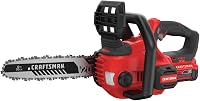
The CRAFTSMAN V20 Cordless Chainsaw has a 12 in chain, a 4.0 Ah battery and charger, auto oiling, tool-free tensioning, and a compact design. Its integrated hook works with the VERSATRACK Wall Organization System, sold separately.
Choose this type of saw when you value cordless movement and a compact body. Battery runtime depends on the cutting task and work pace, so plan charging around the amount of wood you need to process.
The CRAFTSMAN Electric Chainsaw has a 16 in low-kickback bar and chain, a 12 Amp motor, auto-oiling, an oil window, and tool-free chain tensioning. It is corded electric and includes the 16 in chainsaw, bar, and chain.
This type of saw can suit repeated work near a building or workshop. Keep the cord behind you and away from the cutting path, and never let it become a trip hazard around the log.
For more size and feature comparisons, use the Chainsaws: The Complete Buying Guide. If you are comparing larger saws, our guide to the best 18 inch chainsaw can help you judge whether that bar length fits your work.
What should you do if the chain becomes dull?
Stop cutting when the chain produces fine dust, pulls to one side, or needs unusual pressure. Switch off the saw, engage the chain brake, and wait for the chain to stop before inspecting it.
A replacement chain must match the guide bar's length, pitch, gauge, and drive-link count. The KAKEI 16 Inch Chainsaw Chain 3/8" LP has a 3/8 in low-profile pitch, .050 in gauge, 56 drive links, and a semi-chisel chain type.
This chain is described for Craftsman, Poulan, Ryobi, Echo, and Greenworks chainsaws, but compatibility still depends on the exact bar and saw requirements. Check the bar stamp or owner's manual before fitting it.
Our guide to the best chainsaw guide bars explains the measurements that affect chain fit. Never install a chain based only on bar length.
How do you prevent kickback while cutting?
Keep the upper tip of the guide bar away from the wood, branches, and other objects. Kickback can happen when the nose contacts material or the chain becomes caught near that area.
Use the chain brake as a safety control, not as a substitute for good positioning. Keep your left arm firm without locking it, and avoid reaching beyond a stable stance.
Don't cut above shoulder height or use the saw while standing on a ladder. Stop if you cannot keep the bar, your footing, and the wood under control.
A low-kickback bar and chain can reduce some kickback risk, but it doesn't remove the need for safe technique. Compare battery systems and controls in EGO vs STIHL chainsaws.
What should you do after cutting the wood?
Switch off the saw, engage the chain brake, and place it on a stable surface before moving the cut pieces. Let the chain stop fully, then clear sawdust and scraps from the work area.
Check the chain tension and guide bar after the saw cools. Clean away debris according to the manufacturer's instructions, and store the saw with its bar protected.
Keep replacement chains in their protective packaging and protect them from moisture. A chain that has been exposed to dirt or metal should be inspected before the next cut.
If your work involves carving rather than crosscutting logs, compare the options in best cordless chainsaws for wood carving.
What is the best way to cut wood with a chainsaw?
The best way to cut wood with a chainsaw is to match the cut order to the log's support, keep both hands on the saw, and stop before the bar binds. Preparation matters as much as the cutting motion.
Choose the CRAFTSMAN V20 Cordless Chainsaw for compact supported-wood work where cordless movement helps. Choose the CRAFTSMAN Electric Chainsaw for a 16 in bar and corded work near a suitable outlet.
Choose the KAKEI chain only after confirming the 16 in length, 3/8 in low-profile pitch, .050 in gauge, and 56 drive links match your saw. For every version of how to cut wood with a chainsaw, keep the work area clear and never trade control for speed.
Frequently asked questions
What is the safest way to cut wood with a chainsaw?
The safest basic method is to secure the wood, clear the work area, wear chainsaw-rated protective equipment, hold the saw with both hands, and make controlled cuts with the lower part of the bar. Keep your body out of the cutting plane and stop if the chain binds or the wood moves.
Should you cut wood from the top or bottom?
Start by checking how the log is supported. A log resting on both ends is under downward compression near the top, while a log supported at one end has different tension and compression zones.
Make a shallow test cut and watch for pinching before completing the cut.
Why does a chainsaw cut crooked?
A chainsaw may cut crooked because the chain cutters are uneven, the chain is dull, the guide bar is worn, or the saw is being pushed sideways. Stop cutting, switch off the saw, inspect the chain and bar, and correct the problem before continuing.
Can you cut wet wood with a chainsaw?
Yes, a chainsaw can cut wet wood, but wet bark and sawdust can make footing, visibility, and cleanup harder. Secure the log, keep the work area clear, protect the saw from excess debris, and inspect chain tension and lubrication during the job.